
What's Happening?
The National Oceanic and Atmospheric Administration (NOAA) has released its 20th Arctic Report Card, revealing significant environmental changes in the Arctic region. The report, compiled by approximately
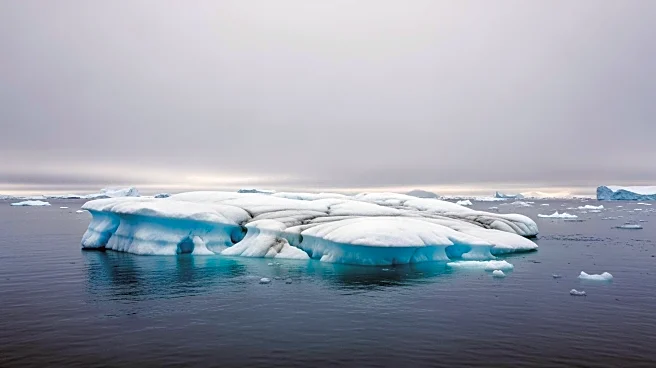
100 scientists, indicates that the last decade has been the warmest on record for the Arctic. Warm Atlantic waters are encroaching into the central Arctic Ocean, accelerating sea ice loss. This reduction in ice, which traditionally reflects sunlight, is contributing to further warming. Additionally, the thawing of Arctic permafrost is releasing carbon dioxide, exacerbating global warming. The report also notes increased precipitation and extreme weather events, such as atmospheric rivers, due to a more moisture-laden atmosphere. Sea surface temperatures have reached record highs, and the extent of sea ice has diminished significantly. The Greenland Ice Sheet continues to lose mass, although at a slower rate than in previous years. These changes are not only affecting the Arctic but have broader implications for global climate patterns.
Why It's Important?
The findings of the Arctic Report Card are crucial as they highlight the Arctic's role as a global climate regulator. The rapid environmental changes in the Arctic have far-reaching impacts, including contributing to global sea level rise and altering weather patterns worldwide. The loss of sea ice and permafrost thawing are significant contributors to climate change, affecting ecosystems and human societies. The report underscores the urgency of addressing climate change, as the Arctic's transformation could lead to more extreme weather events, impacting agriculture, infrastructure, and economies globally. The data also emphasize the need for continued climate science funding and international cooperation to mitigate these changes and adapt to their consequences.
What's Next?
The report suggests that continued monitoring and research are essential to understand the full impact of Arctic changes. There is a need for increased funding for climate science to support these efforts. Policymakers and global leaders may need to prioritize climate action to address the challenges posed by the Arctic's transformation. The report's findings could influence future climate policies and international agreements aimed at reducing greenhouse gas emissions and promoting sustainable practices. Additionally, there may be increased focus on developing strategies to adapt to the changing climate and mitigate its effects on vulnerable communities and ecosystems.
Beyond the Headlines
The Arctic's environmental decline raises ethical and cultural concerns, particularly for indigenous communities who rely on the region's natural resources. The changes threaten traditional ways of life and could lead to displacement and loss of cultural heritage. Furthermore, the report highlights the interconnectedness of global ecosystems, emphasizing the need for a holistic approach to environmental conservation. The Arctic's transformation serves as a stark reminder of the broader impacts of human activities on the planet, prompting discussions on sustainable development and environmental stewardship.