




What's Happening?
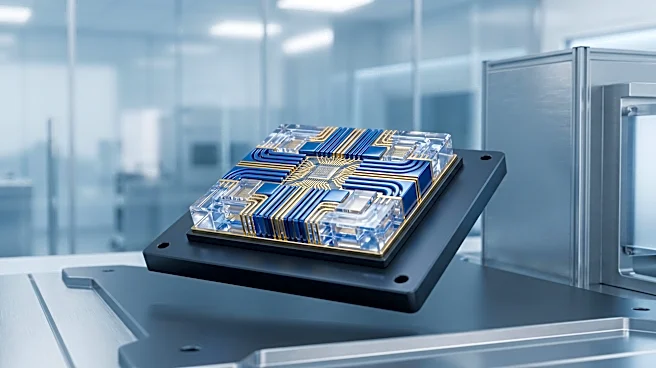
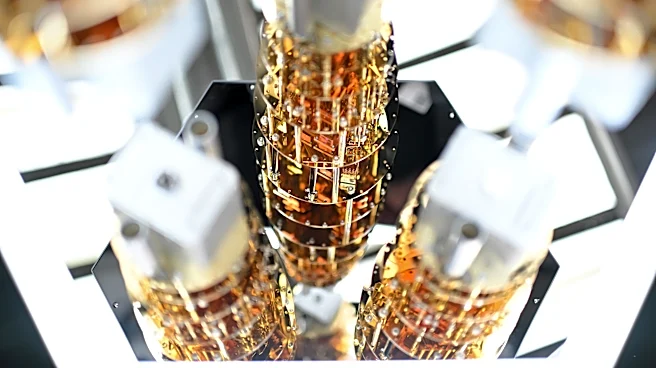
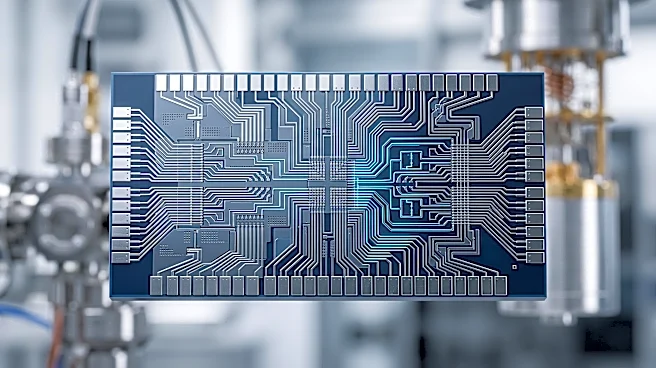
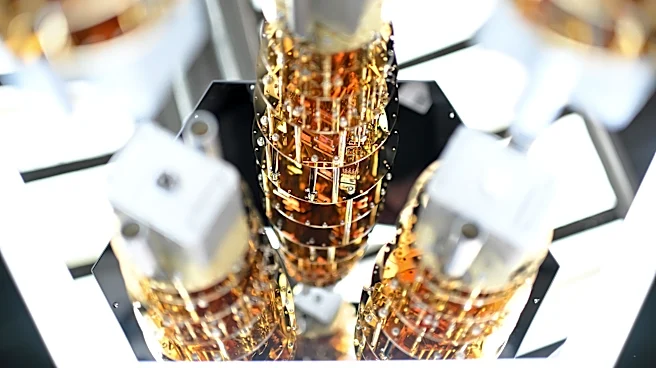
Researchers have developed a system to cancel cryocooler-induced vibrations in trapped-ion quantum systems, significantly improving qubit coherence time. The apparatus uses a closed-cycle cryocooler to thermally isolate a surface-electrode linear Paul
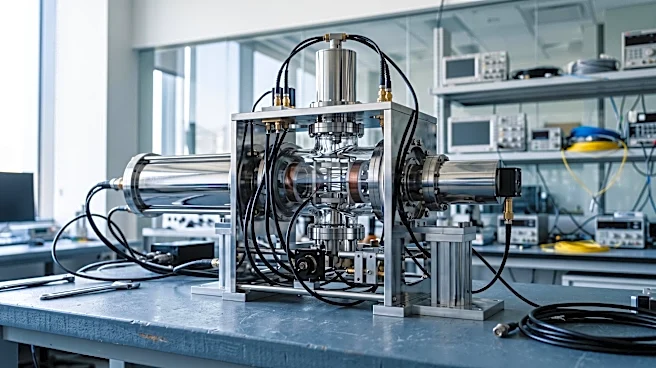
trap, maintaining temperatures of approximately 50 K and 4 K. However, these cryocoolers introduce vibrations, previously measured with displacement amplitudes ranging from 7 nm to 100 nm. To address this, the new system employs a two-arm heterodyne interferometer to monitor the displacement of a partially metalized window on the inner shield. An FPGA-based feed-forward system then applies a compensating phase correction to the Raman beams used for gate operations. This method allows for the measurement and correction of vibrations using a separate laser system, ensuring it does not interfere with qubit operations. The interferometer laser operates at known wavelengths, such as 729 nm and 895 nm, demonstrating the broad applicability of this technique.
Why It's Important?
Cryocooler-induced vibrations are a significant source of decoherence in trapped-ion quantum systems, limiting the performance and reliability of quantum computers. By effectively canceling these vibrations, the new system achieves an order-of-magnitude improvement in qubit coherence time. For cancellation off, the coherence time was measured at 3.0 ± 0.4 ms, while with cancellation on, it increased to 35 ± 5 ms. This substantial enhancement in coherence is critical for performing complex quantum computations, as longer coherence times allow for more operations before quantum information is lost. The ability to maintain qubit coherence for extended periods is a fundamental requirement for building fault-tolerant quantum computers. This development directly addresses a major engineering challenge in quantum hardware, paving the way for more stable and powerful quantum processors. It also reduces the need for specialized trap fabrication techniques that deliver control light through photonics integrated into the trap chip, offering a more generalized solution.
What's Next?
The successful demonstration of this vibration cancellation system is expected to be integrated into future trapped-ion quantum computing platforms. The technique's broad applicability, using readily available laser wavelengths, suggests it could become a standard component in cryogenically cooled quantum systems. Further research will likely focus on refining the feed-forward control algorithms to achieve even greater vibration suppression and exploring its effectiveness in different trapped-ion architectures. The improved coherence times will enable researchers to conduct more sophisticated quantum experiments and develop more robust quantum algorithms. This advancement could also influence the design of other sensitive cryogenic systems where mechanical vibrations are a concern, potentially extending its application beyond quantum computing. The development underscores the ongoing efforts to overcome engineering hurdles in quantum technology, bringing practical quantum computers closer to reality.
Beyond the Headlines
The challenge of mitigating environmental noise, such as mechanical vibrations, is a pervasive issue in quantum computing. This solution highlights the interdisciplinary nature of quantum technology, requiring expertise in physics, engineering, and control systems. The ability to isolate and correct for subtle environmental disturbances is not just a technical feat but also reflects a deeper understanding of quantum mechanics and its interaction with the macroscopic world. Ethically, as quantum computers become more powerful, the precision and control demonstrated by this vibration cancellation system will be crucial for ensuring the integrity and trustworthiness of quantum computations, particularly in sensitive applications like cryptography or drug discovery. Culturally, this advancement reinforces the idea that progress in quantum computing often comes from meticulous engineering and innovative problem-solving at the fundamental level, rather than solely from theoretical breakthroughs. It also emphasizes the importance of robust experimental setups in validating and advancing quantum theories.