






What's Happening?
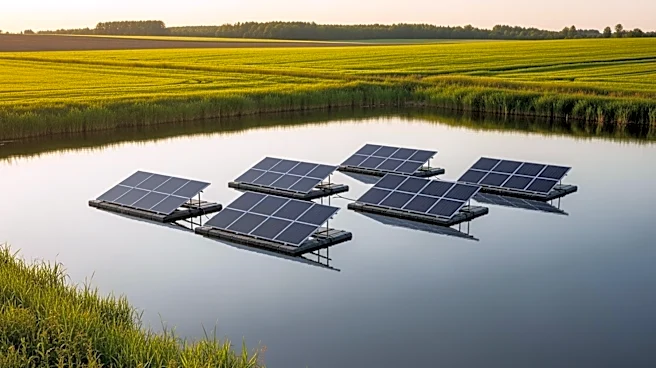
A new floating solar project in Jackson County, Oregon, is gaining attention as a potential model for sustainable agriculture. The Medford Irrigation District has installed nearly 1,800 solar panels on irrigation ponds, generating electricity while reducing
evaporation losses. This innovative approach addresses drought conditions and rising utility costs, offering a sustainable solution for the region's agricultural economy. The project is part of a broader strategy to enhance economic sustainability in rural communities by integrating renewable energy with existing water infrastructure.
Why It's Important?
The floating solar project represents a significant step toward sustainable agriculture in Southern Oregon. By generating renewable energy and conserving water, the project addresses two critical challenges facing the region: water scarcity and high energy costs. The initiative could serve as a blueprint for other rural areas seeking to balance environmental and economic needs. Additionally, the project supports community solar programs, providing utility bill credits to residents and businesses, including low-income households.
What's Next?
The success of the Medford Irrigation District project could lead to similar initiatives in other drought-prone regions. State and federal agencies are likely to continue supporting renewable energy projects that enhance agricultural sustainability. As the project progresses, stakeholders will evaluate its impact on water conservation, energy production, and economic stability in Southern Oregon.