






What's Happening?
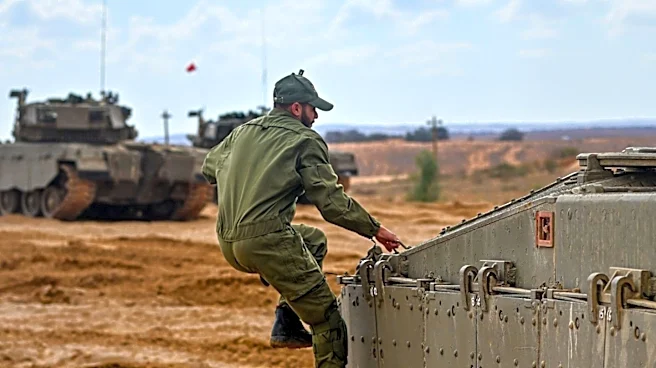
The Israeli Defense Forces (IDF) and the Defense Ministry are developing a government resolution and advancing legislation in the Knesset to safeguard the benefits and entitlements of reservists and their families. This initiative comes in response to a Walla
investigation that revealed gaps in eligibility for benefits for reservists whose service spans across two calendar years, specifically for 2026 and 2027. Some reservists, despite serving extended periods, were failing to meet minimum service day requirements within a single calendar year, thus losing access to crucial benefits like mental health treatment, maternity leave grants, student grants, and vacation vouchers. The proposed resolution aims to ensure that service days accumulated across both years are considered for eligibility, preventing reservists from being penalized due to bureaucratic divisions.
Why It's Important?
This move is critical for ensuring the well-being and fair treatment of reservists and their families, who bear significant personal and financial burdens due to prolonged military service. The current eligibility gaps create an unfair situation where dedicated service members are denied essential support, potentially leading to financial hardship and emotional distress. Protecting these benefits is vital for maintaining morale within the reserve forces and ensuring that individuals are not deterred from fulfilling their national duty. It also addresses a systemic issue that could undermine the long-term sustainability of Israel's reserve-dependent defense model. The resolution and legislation aim to rectify these administrative oversights, demonstrating a commitment to supporting those who serve the country.
What's Next?
The government resolution is intended to provide a quicker solution for eligibility issues, pending government approval, while the legislative process in the Knesset is expected to take longer. The IDF has clarified that service days for battalions like Battalion 363, whose duty spans 2026 and 2027, will be calculated across both years to determine eligibility for benefits in 2027. However, wives of reservists are demanding an interim solution for 2026, arguing that families should not have to wait for the legislative process to conclude. The IDF is also preparing briefings for commanders and personnel to outline available assistance and clarify eligibility mechanisms. The ultimate goal is to ensure that reservists' rights are not negatively impacted by the division of their service across calendar years.
Beyond the Headlines
The issue of reservist benefits highlights a broader challenge faced by nations relying on citizen-soldiers: balancing military readiness with the social and economic integration of service members into civilian life. The administrative hurdles faced by reservists underscore the need for flexible and responsive support systems that adapt to the realities of modern warfare, which can involve unpredictable and extended deployments. This situation also brings to light the often-unseen sacrifices made by military families, who manage households and cope with the absence of loved ones. The public and political response to these issues can significantly influence national unity and the willingness of future generations to serve, making the fair treatment of reservists a matter of long-term national security and social cohesion.