


What's Happening?
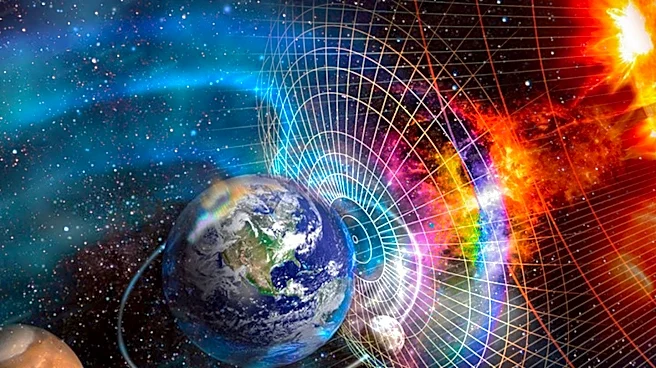
The National Oceanic and Atmospheric Administration (NOAA) Space Weather Prediction Center has announced the possibility of a magnetic storm occurring on Earth within the next 24 hours. This event is part of a series of solar activities expected in August
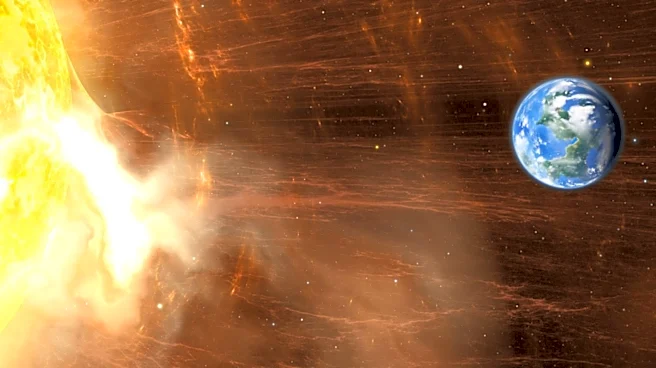
2026, which could impact weather-sensitive individuals and electronic devices. Magnetic storms are caused by disturbances in Earth's magnetic field due to interactions with solar wind streams. These disturbances can last from a few hours to several days. The NOAA has outlined a schedule for geomagnetic disturbances, with mild, moderate, and strong storms expected throughout the month. The effects on humans can include headaches, mood swings, and sleep disturbances, while electronic equipment may experience disruptions in communication satellites, GPS navigation errors, and power surges.
Why It's Important?
The potential magnetic storm could have significant implications for both individuals and technology. For people, especially those with pre-existing health conditions, the storm may exacerbate symptoms such as headaches and mood swings. On a technological level, the storm could disrupt communication systems, GPS navigation, and power grids, affecting industries reliant on these technologies. This highlights the importance of preparedness and resilience in infrastructure to mitigate the impact of such natural phenomena. The event underscores the interconnectedness of solar activity and terrestrial systems, emphasizing the need for ongoing monitoring and research in space weather.
What's Next?
As the magnetic storm approaches, stakeholders including government agencies, healthcare providers, and technology companies may need to implement contingency plans to address potential disruptions. The NOAA and other space weather monitoring organizations will continue to provide updates and forecasts to help mitigate the storm's impact. Public awareness campaigns may be necessary to inform individuals about potential health effects and safety measures. In the long term, this event could prompt further investment in research and technology to better predict and manage the effects of space weather on Earth.