



What's Happening?
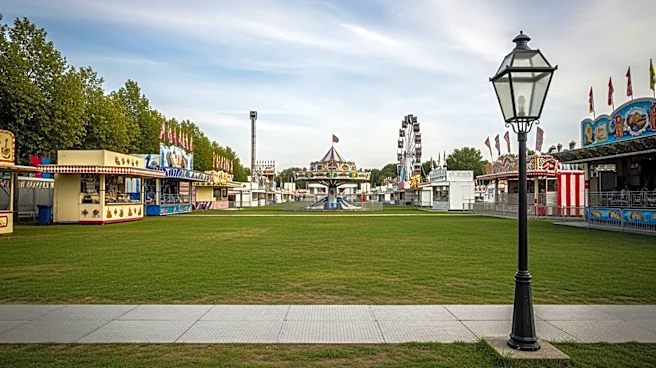
At least seven U.S. states have announced they will not participate in President Donald Trump's 'Great American State Fair,' an event intended to celebrate America's 250th anniversary. The fair, organized by the Trump-aligned nonprofit Freedom 250, is
scheduled to take place on the National Mall in Washington, D.C., from June 25 to July 10. It aims to feature themed pavilions from all 50 states and U.S. territories, showcasing their culture and heritage. However, states including Connecticut, Illinois, Maine, Massachusetts, North Carolina, Oregon, and Washington have opted out, citing cost concerns and the event's increasing partisan nature. Freedom 250 has covered the construction costs of the booths and pavilions, but participating states are responsible for the design and decoration expenses. Some states have expressed that the financial burden and the event's political associations are reasons for their withdrawal.
Why It's Important?
The withdrawal of these states highlights the political divisions that are influencing national celebrations, such as the semiquincentennial events. The decision by these states, many led by Democratic governors, underscores the challenges of organizing a unifying national event in a politically polarized environment. The financial implications are also significant, as states are required to fund their participation, which some have deemed too costly. This situation reflects broader issues of resource allocation and political alignment, potentially affecting public perception and participation in national celebrations. The event's partisan associations may also impact its success and the level of engagement from various stakeholders.
What's Next?
Despite the withdrawals, Freedom 250 has stated that all states and territories will still be represented in some form, whether through a governor's office, tourism board, or a state company. The event is set to proceed with its planned attractions, including entertainment, food exhibits, and military displays. However, the absence of official delegations from several states may influence the overall atmosphere and reception of the fair. The organizers may need to address these concerns to ensure a successful and inclusive event. Additionally, the political and financial dynamics surrounding the fair could prompt further discussions about the organization and funding of future national celebrations.