

What's Happening?
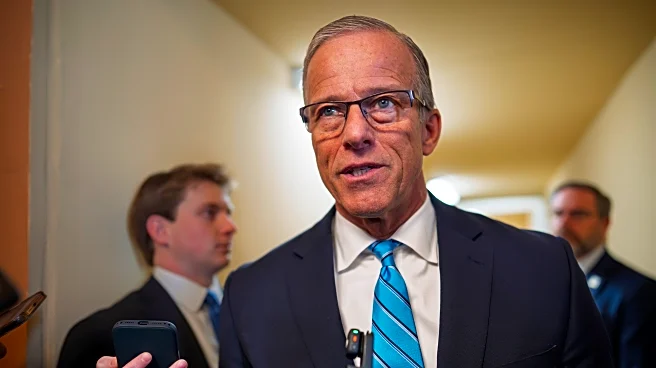
The Senate is reportedly close to reaching an agreement to fund the Department of Homeland Security (DHS) and end a partial government shutdown that has lasted six weeks, significantly affecting air travel. A group of Senate Republicans met with President
Trump at the White House and expressed optimism about a potential deal. The proposed agreement would fund various DHS agencies, including the Transportation Security Administration (TSA), Federal Emergency Management Agency (FEMA), and the Coast Guard, but would exclude funds for Immigration and Customs Enforcement's (ICE) deportation operations. Senate Republicans plan to address ICE funding and elements of the SAVE America Act through the budget reconciliation process. Independent Senator Angus King and GOP Senator Susan Collins have both expressed hope that the impasse will be resolved soon.
Why It's Important?
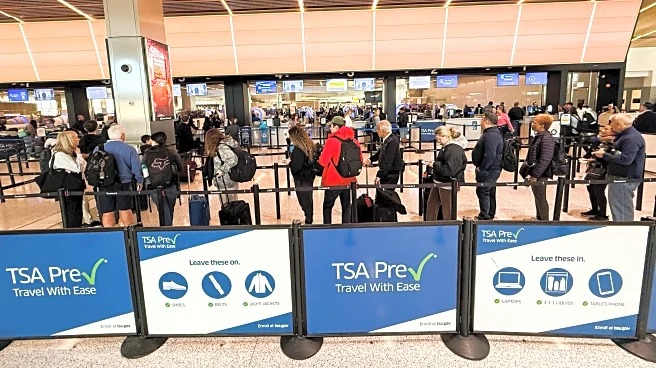
The resolution of the DHS funding impasse is crucial as it affects national security and the functioning of key federal agencies. The shutdown has disrupted air travel, causing long wait times at airports and affecting the operations of TSA and other agencies. The potential deal could restore normalcy to these operations and alleviate the strain on federal employees working without pay. Additionally, the use of budget reconciliation to pass ICE funding and the SAVE America Act highlights the political maneuvering involved in addressing contentious issues like immigration and election security. The outcome of these negotiations could set precedents for future legislative processes and impact the political landscape.
What's Next?
If the Senate finalizes the legislative text, the deal could be approved by the end of the week, restoring funding to DHS and ending the shutdown. However, the exclusion of ICE funding from the initial agreement suggests that further negotiations will be necessary. The budget reconciliation process will be used to address ICE funding and the SAVE America Act, which could face opposition from Democrats. The resolution of these issues will require continued dialogue between lawmakers and the White House, and the outcome could influence future legislative strategies and priorities.