


What's Happening?
The Presidents of Mozambique, Daniel Chapo, and Zimbabwe, Emmerson Dambudzo Mnangagwa, have initiated a significant expansion of the Beira-Harare fuel corridor. This project aims to increase the CPMZ pipeline's annual transport capacity by 67%, from 3
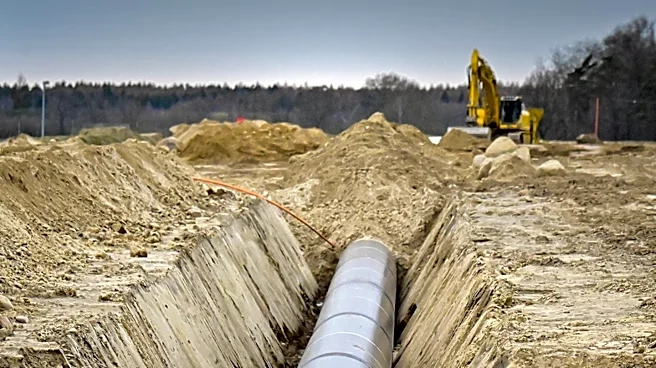
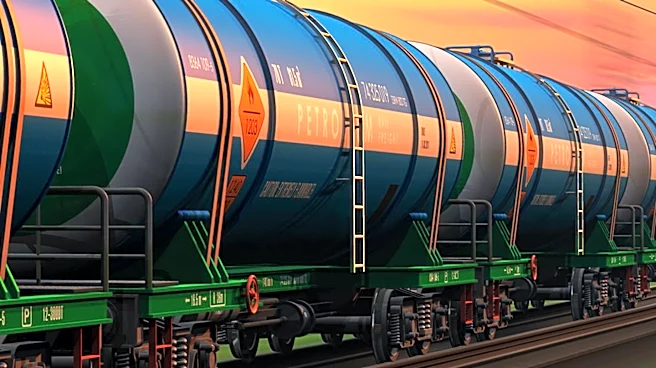
million to 5 million cubic meters, by the end of 2027. This expansion will allow for the transport of an additional two billion liters of fuel annually into Southern Africa's interior, strengthening a crucial supply route that connects the Port of Beira with Zimbabwe. The project will support access to diesel, petrol, and jet fuel across regional markets, including Zambia, Malawi, Botswana, and the Democratic Republic of Congo. New pumping stations will be constructed at Nhamatanda in Sofala Province and Messica in Manica Province. This development is synchronized with the planned expansion of the Petrozim Line between Feruka and Harare, creating an aligned, higher-capacity route from the Mozambican coast into the Southern African hinterland. The expansion builds on CPMZ’s previous project, completed in 2024, which increased annual pipeline capacity from 2 million to 3 million cubic meters.
Why It's Important?
This expansion represents a substantial investment in regional energy resilience and cooperation between Mozambique and Zimbabwe. By strengthening the connection between the Port of Beira and the Southern African hinterland, Mozambique reinforces its role as a strategic gateway for regional trade. For Zimbabwe, the stronger Beira-Harare corridor will enhance its energy security and create greater capacity to serve markets beyond its borders, positioning it as an important distribution hub for fuel. The project will support growing fuel demand in Mozambique, Zimbabwe, and wider regional markets, ensuring a more reliable supply of essential energy products. This infrastructure development is expected to support economic activity and create greater resilience for the future across Southern Africa, benefiting industries and consumers reliant on consistent fuel supplies. The continuous operation of the pipeline, 24 hours a day and 365 days a year, supported by a Mozambican technical workforce, underscores the commitment to maintaining critical supply routes without interruption.
What's Next?
Construction and commissioning of the new pumping stations will proceed without interrupting daily pipeline operations or fuel supplies to markets served by the corridor. The project is expected to be completed by the end of 2027, at which point the CPMZ pipeline's annual transport capacity will reach 5 million cubic meters. Preliminary studies are also underway to assess the potential replacement of the existing pipeline with a larger-diameter line, which could increase annual capacity to approximately 12 million cubic meters to meet projected demand through to 2050. Additionally, a possible extension of the Harare-Lusaka route into Zambia’s Copperbelt is being evaluated. These longer-term options aim to further integrate regional fuel infrastructure and improve the movement of essential energy products between coastal and landlocked Southern African markets, ensuring sustained energy security and economic growth in the region.
Beyond the Headlines
The expansion of the Beira-Harare fuel corridor signifies a broader strategic shift towards enhancing regional connectivity and economic integration in Southern Africa. This infrastructure project not only addresses immediate energy demands but also lays the groundwork for long-term regional stability and development. The emphasis on cooperation between Mozambique and Zimbabwe highlights a growing trend of cross-border initiatives aimed at leveraging shared resources and geographical advantages for mutual benefit. The project's focus on increasing capacity and exploring future expansions, such as a larger-diameter pipeline and potential extensions into Zambia, indicates a proactive approach to anticipating and meeting future energy needs. This could lead to increased foreign investment in the region, fostering industrial growth and creating employment opportunities. Furthermore, the project's commitment to continuous operation and stringent safety standards underscores a dedication to reliable and responsible infrastructure development, which is crucial for building investor confidence and ensuring sustainable economic progress.