

What's Happening?
A new study published in Advances in Atmospheric Sciences has identified a theoretical limit of 129 days for accurate weather prediction, even under perfect conditions. This research, led by Dr. Wei Zhang from the University of Miami, challenges previous
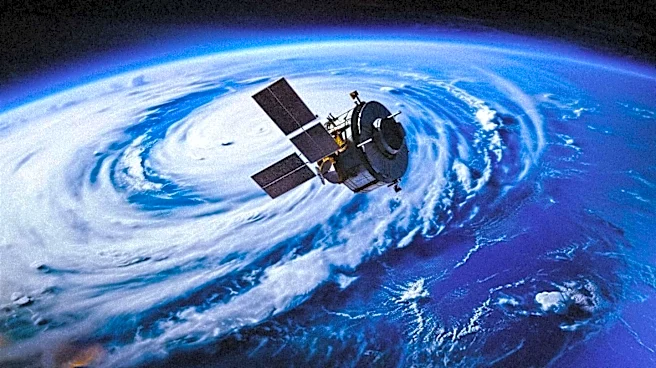
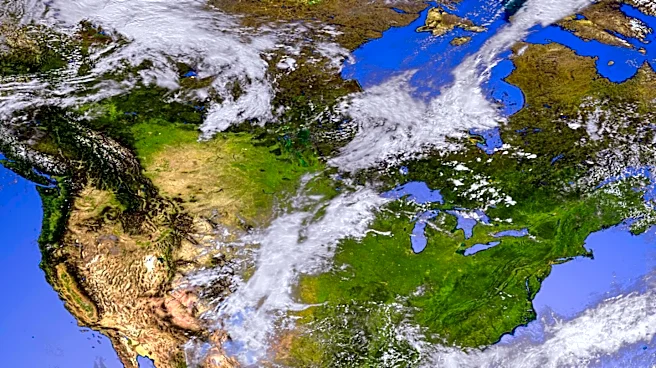
methods that focused on error growth in forecasts. Instead, the study examines the atmospheric energy cycle, suggesting that the uncertainty introduced by solar radiation limits predictability. Currently, weather forecasts are reliable up to 14 days, but the study indicates that under ideal conditions, this could be extended to 62 days with high confidence, with the remaining period offering low-confidence guidance.
Why It's Important?
This finding is crucial for meteorologists and climate scientists as it sets a tangible target for advancing weather prediction capabilities. Understanding the limits of predictability can help improve forecasting models and techniques, potentially leading to more accurate long-term weather predictions. This could have significant implications for various sectors, including agriculture, disaster management, and energy, which rely heavily on weather forecasts for planning and decision-making. The study also highlights the role of quantum-scale uncertainties in atmospheric dynamics, offering new insights into the complexities of weather systems.
What's Next?
The research team plans to conduct further studies to validate their findings and explore additional methods to enhance weather prediction accuracy. If confirmed, these results could drive advancements in meteorological science, encouraging the development of new technologies and models to extend the predictability window. Stakeholders in industries dependent on weather forecasts may need to adjust their strategies based on these insights, potentially leading to innovations in how weather data is utilized. The study also opens up discussions on the integration of artificial intelligence in improving forecast accuracy, which could revolutionize the field.