



What's Happening?
South Sudan is grappling with a severe and worsening aid crisis, as food stocks managed by the World Food Programme (WFP) are critically low, threatening over one million vulnerable people with loss of life-saving assistance by October. Weekly, approximately
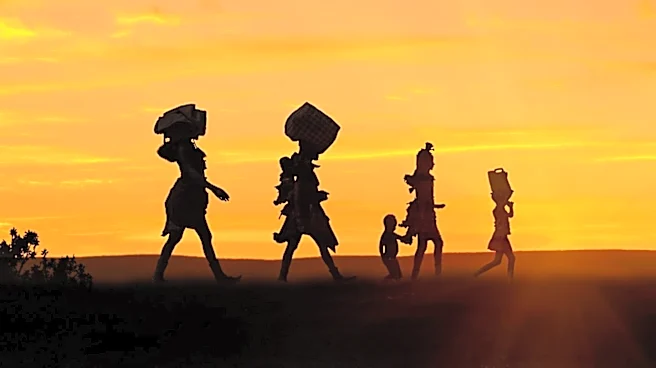
3,000 refugees and returnees are crossing into South Sudan from Sudan, many arriving hungry and exhausted, further straining already scarce resources. In Malakal, a key WFP logistics hub, food stocks have plummeted from 10,000 metric tonnes last year to less than 300 tonnes. This drastic reduction comes as humanitarian agencies face shrinking global resources while the need for aid continues to rise. Matthew Hollingworth, WFP assistant executive director, observed firsthand the immense pressures on communities struggling with conflict, displacement, hunger, and climate shocks during his visit to Renk, Malakal, and Pigi county. The war in Sudan has significantly driven up prices and placed additional strain on South Sudan, a country already stretched by the influx of refugees. The WFP reports an immediate funding gap of $86 million and a projected shortfall of $416 million over the next six months, jeopardizing its ability to support refugees, displaced individuals, and host communities.
Why It's Important?
The deepening aid crisis in South Sudan carries profound implications for regional stability and human welfare. The potential loss of food and nutrition assistance for over a million people could trigger widespread famine, increased mortality rates, and further displacement, exacerbating an already fragile humanitarian situation. The influx of refugees from Sudan, driven by ongoing conflict, places immense pressure on South Sudan's limited infrastructure and resources, creating a cycle of vulnerability. The WFP's significant funding shortfalls highlight a broader challenge in international humanitarian aid, where global crises are outstripping available resources. This situation not only threatens immediate survival but also undermines long-term development efforts, as communities are unable to recover from successive shocks. The crisis also underscores the interconnectedness of regional conflicts, with the war in Sudan directly impacting the humanitarian landscape in South Sudan through increased refugee flows and economic disruptions, such as rising food prices. Without urgent intervention, the crisis could destabilize the region further and lead to a catastrophic loss of life.
What's Next?
The immediate priority for the World Food Programme and other humanitarian organizations in South Sudan is to secure urgent funding to prevent the cessation of life-saving aid for over one million people by October. The WFP's stated funding gaps of $86 million immediately and $416 million over the next six months are critical targets for international donors. Without these funds, WFP will be forced to continue reducing rations and cutting support, which will have dire consequences for the vulnerable populations. Efforts will likely intensify to advocate for increased international support and draw attention to the escalating crisis. Additionally, there will be continued monitoring of the influx of refugees from Sudan and attempts to manage the humanitarian response at transit centers like Renk, which are currently overwhelmed. Addressing the underlying issues of insecurity, climate shocks, and political divisions within South Sudan will also be crucial for any sustainable long-term solution, alongside calls for the government to address issues like illegal checkpoints that hinder aid delivery.
Beyond the Headlines
The crisis in South Sudan, characterized by dwindling food stocks and massive funding shortfalls, reveals a systemic vulnerability in global humanitarian response mechanisms. The reliance on short-term funding cycles and the competition for donor attention among numerous global crises often leave protracted emergencies like South Sudan's under-resourced. This situation highlights the ethical challenge faced by humanitarian organizations: how to prioritize aid when resources are insufficient to meet all needs. The long-term implications extend beyond immediate hunger, impacting the social fabric, educational opportunities, and economic stability of an entire generation. Children, in particular, face severe risks of malnutrition, which can lead to irreversible developmental damage. The continuous displacement and lack of stable livelihoods also contribute to a cycle of dependency on aid, hindering the development of self-sufficient communities. This crisis serves as a stark reminder of the need for more sustainable and predictable funding models for humanitarian aid, coupled with robust political solutions to address the root causes of conflict and displacement.