




What's Happening?
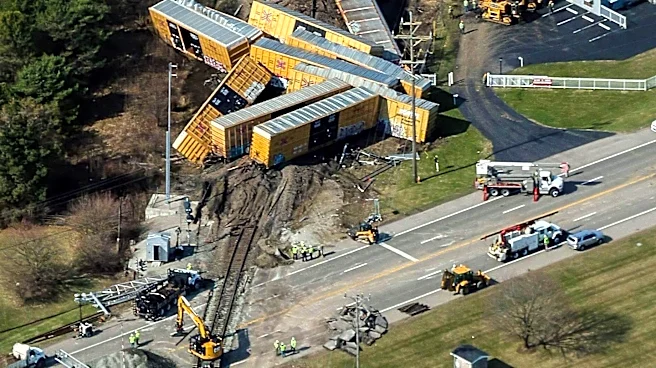
Ten lawsuits have been filed accusing several prominent law firms, including Grant & Eisenhofer, Morgan & Morgan, and Motley Rice, of malpractice. These firms represented hundreds of residents and businesses affected by the 2023 train derailment in East
Palestine, Ohio. The lawsuits allege issues related to a $600 million settlement reached with Norfolk Southern. The derailment in East Palestine involved hazardous materials, leading to significant environmental and health concerns for the local community. The legal actions suggest that the representation provided by these firms may have been inadequate or negligent, potentially compromising the interests of their clients in the settlement process. The specific details of the alleged malpractice have not been fully disclosed in the provided information, but the sheer number of lawsuits indicates a significant challenge to the handling of the settlement.
Why It's Important?
This development is important as it casts a shadow over a major settlement intended to provide relief to victims of a significant environmental disaster. If the malpractice claims are substantiated, it could undermine public trust in the legal system and the ability of large law firms to effectively represent affected communities. For the residents and businesses of East Palestine, these lawsuits represent a potential 'second betrayal,' as they may have been inadequately compensated or their legal rights not fully protected in the initial settlement. The outcome of these cases could also influence how future large-scale disaster settlements are managed, potentially leading to increased scrutiny of legal representation and greater demands for transparency and accountability from law firms involved in such high-stakes litigation. It highlights the complex challenges faced by communities in seeking justice and fair compensation after environmental catastrophes.
What's Next?
The accused law firms will likely face a rigorous legal battle to defend against these malpractice claims. The lawsuits will proceed through the courts, potentially involving extensive discovery processes to examine the details of the $600 million Norfolk settlement and the firms' representation of their clients. It is probable that more information regarding the specific allegations of malpractice will emerge as these cases advance. The affected residents and businesses will be closely watching these proceedings, hoping for a resolution that addresses their concerns about the initial settlement. The legal community will also be observing, as the outcome could set precedents for attorney responsibility in mass tort and class action lawsuits, particularly those arising from environmental disasters. There may also be calls for regulatory bodies to review the conduct of the involved law firms.
Beyond the Headlines
Beyond the immediate legal implications, these lawsuits highlight broader issues concerning the ethical responsibilities of legal professionals in large-scale disaster litigation. The concept of a 'second betrayal' suggests a profound breach of trust, where those who were supposed to advocate for victims are now themselves accused of causing further harm. This situation could lead to a re-evaluation of legal ethics and client protection mechanisms in mass tort cases, especially when vulnerable communities are involved. It also underscores the power dynamics at play in such settlements, where the complexity of legal processes can make it difficult for individual victims to fully understand and challenge the terms of their compensation. The long-term societal impact could include increased skepticism towards legal representation in disaster recovery and a push for more robust oversight to ensure equitable outcomes for affected populations.