

What's Happening?
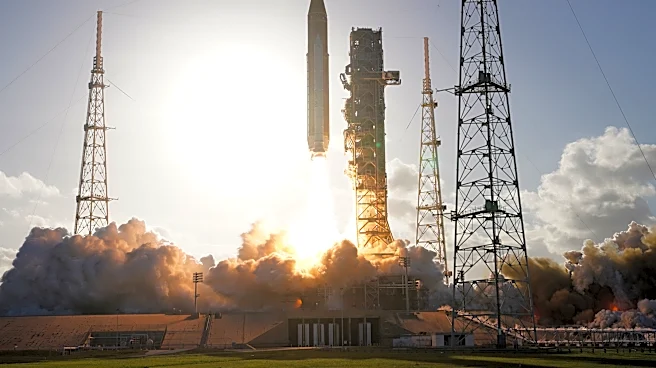
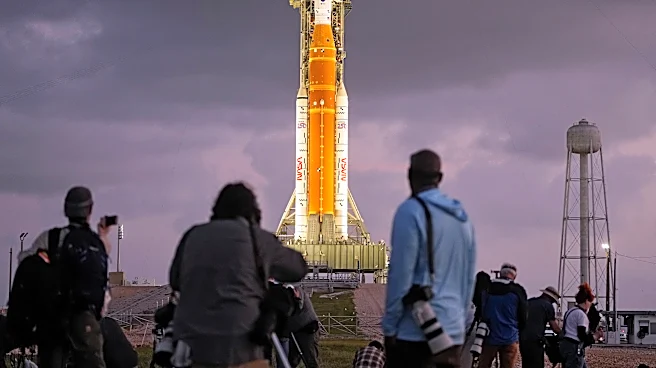
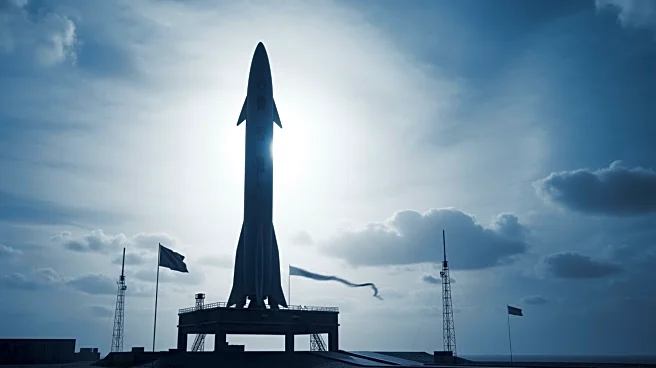
NASA has successfully launched the Artemis II mission, marking the first crewed flight to the Moon in over 50 years. The Space Launch System (SLS) rocket took off from Kennedy Space Center in Florida, carrying the Orion capsule with four astronauts: Commander
Reid Wiseman, Pilot Victor Glover, and Mission Specialists Christina Koch and Jeremy Hansen. The mission aims to conduct a 10-day journey around the Moon, with the spacecraft initially placed in an elliptical orbit around Earth before a translunar injection burn propels it towards the Moon. This mission is part of NASA's broader Artemis program, which seeks to establish a sustainable human presence on the Moon.
Why It's Important?
The Artemis II mission represents a significant milestone in U.S. space exploration, as it revives manned lunar missions that have been dormant since the Apollo program. This mission not only demonstrates technological advancements in space travel but also sets the stage for future lunar exploration, including the establishment of a permanent base on the Moon. The success of Artemis II could bolster U.S. leadership in space exploration and inspire international collaboration in space science and technology.
What's Next?
Following the successful launch and initial maneuvers, the Artemis II crew will conduct a translunar injection burn to send the spacecraft around the Moon. The mission will test the spacecraft's systems and capabilities, paving the way for future missions that aim to land humans on the lunar surface by 2028. NASA's long-term goal is to use the Moon as a stepping stone for future manned missions to Mars.