
What's Happening?
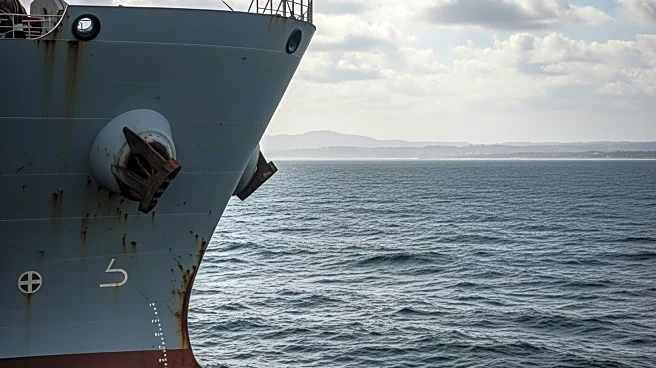
The United States has captured a fourth oil tanker linked to Venezuela, continuing its enforcement of sanctions against the country. The tanker, named Sophia, was seized in the Atlantic Ocean while carrying
approximately 1.8 million barrels of Venezuelan crude oil. This action is part of a broader U.S. strategy to block the transport of Venezuelan oil, which is considered illicit by the U.S. government. The U.S. Southern Command has stated its commitment to preventing illegal activities in the Western Hemisphere, emphasizing that only lawful energy commerce will be permitted. The seizures also serve as a warning to Iran, as the tankers have previously engaged in business with Iranian oil exporters.
Why It's Important?
The seizure of these tankers underscores the U.S. government's firm stance on enforcing sanctions against Venezuela, aiming to cut off financial resources to the Venezuelan government. This move is significant as it highlights the U.S.'s broader geopolitical strategy to exert pressure on countries like Venezuela and Iran, which are seen as adversaries. The enforcement of these sanctions could impact global oil markets, particularly affecting countries that rely on Venezuelan oil. Additionally, the U.S.'s actions may strain diplomatic relations with countries involved in the shadow fleet operations, potentially leading to international tensions.
What's Next?
The U.S. plans to continue its blockade of Venezuelan oil exports, with the goal of acquiring 30-50 million barrels of oil to be sold at market price. This strategy is intended to offset the costs of U.S. military operations in the Caribbean. The ongoing enforcement actions may provoke responses from countries like Iran and Russia, which have been linked to the shadow fleet. The U.S. government is likely to face international scrutiny and potential diplomatic challenges as it continues to pursue its sanctions policy.