







What's Happening?
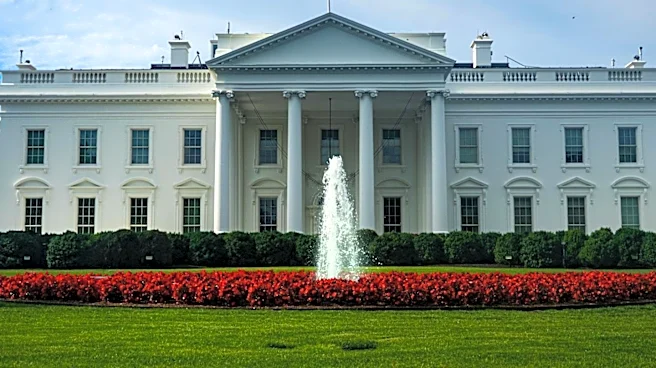
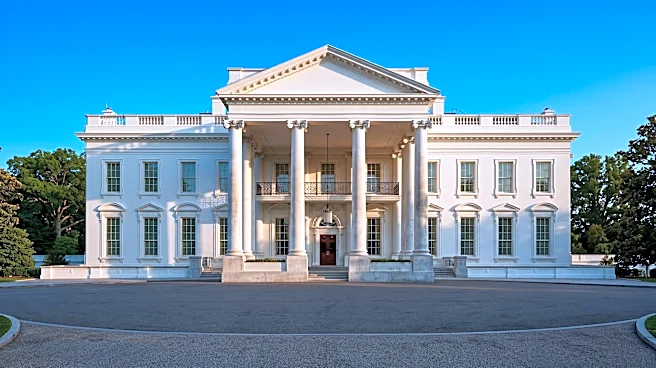
The White House has developed and released five Trump-themed video games, hosted on an official .gov website, as a means to appeal to younger audiences. These games are largely knockoffs of classic titles, with themes directly promoting the Trump administration's
agenda. For instance, 'Build the Wall' is a Tetris-like game where players construct a border wall to protect the U.S. from a 'zombie horde' from Mexico. Another game, 'Rio Run,' features a chibified version of border czar Tom Homan detaining 'border hoppers,' with a 'Deported' count displayed. Other games include 'Flappy Bill,' a 'Flappy Bird' knockoff, 'Supply Line,' a 'Punch-Out!!' variant, and 'Trump Savings Tycoon,' a clicker game. The administration has also previously used pop culture references without permission, such as setting an ICE deportation video to Sabrina Carpenter's song 'Juno,' which the singer condemned. Tetris has publicly stated they were not involved in 'Build the Wall' and take copyright infringement seriously.
Why It's Important?
This development is significant as it represents a novel and controversial approach by the White House to engage with the public, particularly youth, through video games. The use of government resources to create partisan-themed games raises questions about the appropriate use of official platforms and potential ethical boundaries between political messaging and entertainment. The games' content, which includes caricatures of migrants as 'zombie hordes' and 'border hoppers,' could be seen as dehumanizing and divisive, potentially exacerbating social tensions. Furthermore, the alleged copyright infringement by the White House in using established game mechanics and intellectual property without permission could set a problematic precedent and lead to legal challenges from intellectual property holders. This strategy highlights a growing trend of political entities leveraging digital media and popular culture for propaganda, blurring the lines between information, entertainment, and political persuasion.
What's Next?
The White House's continued use of video games for political messaging is likely to face ongoing scrutiny and potential backlash from various stakeholders. Legal challenges regarding copyright infringement, particularly from companies like Tetris, could emerge, forcing the administration to address intellectual property concerns. Public and media reactions will likely continue to debate the ethics of using government platforms for such content and the implications for political discourse. It remains to be seen if other pop culture figures or companies whose intellectual property has been used without permission will follow Sabrina Carpenter's lead in publicly condemning the administration's actions. The administration may also continue to release more games, as a sixth title is reportedly planned, further escalating the debate around this new form of political communication.
Beyond the Headlines
The creation of these Trump-themed video games by the White House points to a deeper shift in political communication strategies, where traditional boundaries between government messaging and popular culture are increasingly eroded. This approach could normalize the use of gamification for political ends, potentially influencing how future administrations or political campaigns engage with citizens. The ethical implications extend to the potential for desensitization to serious issues, as complex policy matters like immigration are reduced to simplistic game mechanics. This trend raises concerns about the manipulation of public perception, especially among younger demographics who are highly engaged with digital media. The incident also underscores the ongoing tension between intellectual property rights and the public domain in the digital age, particularly when government entities are involved. It highlights a broader cultural phenomenon where entertainment platforms are becoming battlegrounds for ideological influence.