



What's Happening?
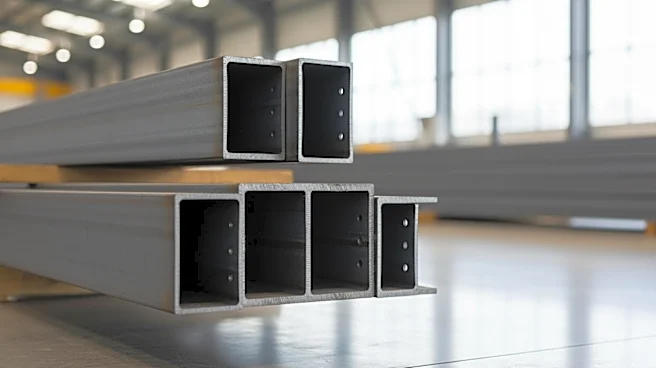
The European Union (EU) has finalized an agreement to protect its steelmaking sector from global overcapacity. This measure introduces tariff-free quotas set at 18.3 million tonnes per year, with a 50% duty on out-of-quota imports for 30 categories of steel products.
Additionally, a 'melt-and-pour' requirement has been established to enhance traceability and transparency within the EU steel supply chain. This initiative aims to safeguard approximately 2.5 million jobs linked to steel production and support the EU's decarbonization goals. The measure applies to all imported products except those from EEA countries, which will still be subject to the melt-and-pour requirements. The EU's steel industry has faced significant challenges due to global overcapacity, projected to reach 721 million tonnes by 2027, far exceeding the EU's annual steel consumption.
Why It's Important?
The EU's decision to implement these protective measures is crucial for maintaining the stability and competitiveness of its steel industry, which is foundational to the continent's economy. By addressing global overcapacity, the EU aims to prevent job losses and support its decarbonization efforts, aligning with broader environmental goals. The move also highlights the EU's commitment to maintaining a sustainable and sovereign steel industry, which is vital for economic prosperity. The introduction of the melt-and-pour requirement enhances supply chain transparency, potentially setting a precedent for other industries facing similar challenges.
What's Next?
The EU will continue to engage with global partners to address the broader issue of steel overcapacity. The implementation of these measures may prompt reactions from international trade partners, particularly those affected by the new tariffs. The EU's approach could influence future trade negotiations and agreements, especially with countries like the United States, where trade tensions over steel have been prominent. Monitoring the impact of these measures on the EU's steel industry and its global trade relations will be essential in the coming years.