






What's Happening?
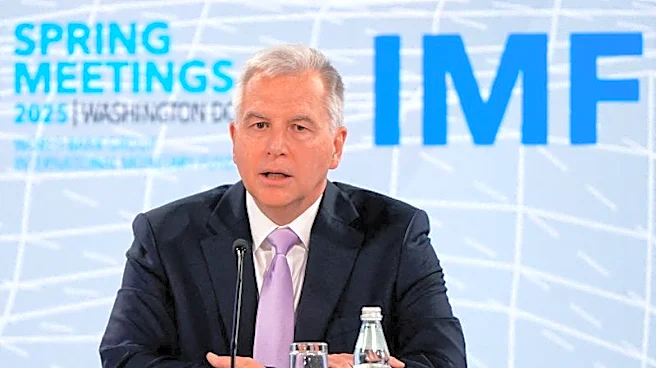
Nigeria's banking sector has successfully raised 4.65 trillion naira in new capital, meeting the new capital requirements set to strengthen the financial system's resilience. This development was announced by Olayemi Cardoso, the Governor of the Central
Bank of Nigeria, during the Spring Meetings of the World Bank and the International Monetary Fund in Washington, DC. The recapitalization effort saw participation from both domestic and international investors, with 72.55% of the capital sourced locally and 27.45% from international markets. This move is part of broader economic reforms initiated by President Bola Tinubu's administration, aimed at transitioning Nigeria from economic survival to growth. The reforms include market-based foreign exchange and fuel pricing systems, which have contributed to stabilizing the economy. Despite global economic challenges, Nigeria has managed to contain external shocks through exchange rate stability and stronger reserves.
Why It's Important?
The recapitalization of Nigeria's banking sector is a significant step towards enhancing the country's financial stability and resilience. By meeting the new capital requirements, Nigerian banks are better equipped to absorb economic shocks, which is crucial in a global environment marked by geopolitical tensions and financial uncertainties. The successful mobilization of capital reflects sustained confidence in Nigeria's banking sector, which is vital for attracting further investment and supporting economic growth. These reforms are expected to boost domestic production, increase private sector confidence, and drive sustainable growth, ultimately reducing poverty and improving Nigeria's global economic standing. The focus on strengthening financial resilience is also likely to enhance Nigeria's ability to withstand future economic challenges.
What's Next?
As Nigeria continues to implement its economic reforms, the focus will likely remain on maintaining macroeconomic stability and attracting investment. The government is expected to continue its efforts to reduce capital costs for developing countries and advocate for reforms that support sustainable growth. With the banking sector recapitalization complete, attention may shift towards other areas of the economy, such as power, agriculture, infrastructure, and digital innovation, which have been identified as key growth drivers. The ongoing support from development partners and rising investor interest in sectors like energy and agribusiness suggest that Nigeria is on a path towards accelerated growth and job creation.