








What's Happening?
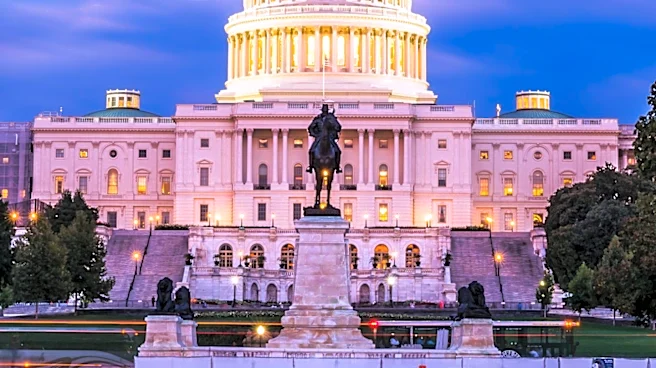
On July 4, 2026, hundreds of masked individuals associated with the white nationalist group Patriot Front marched in Washington, DC, during the 250th Independence Day celebrations. The group, known for its extremist views, prominently displayed Confederate
flags and chanted slogans such as 'Reclaim America.' The Patriot Front, founded by Thomas Rousseau after the 2017 'Unite the Right' rally in Charlottesville, Virginia, has a history of provocative actions, including a 2022 incident where members were arrested in Idaho for inciting a riot. The group has been involved in various controversial activities, including distributing propaganda in New York City and participating in the March for Life rally earlier in the year. During the DC march, police and some National Guard members were present to monitor the situation, ensuring public safety while recognizing the group's right to free expression.
Why It's Important?
The march by the Patriot Front in Washington, DC, underscores ongoing tensions related to racial and ideological divisions in the United States. The group's actions, particularly on a significant national holiday, highlight the persistent presence of extremist ideologies and their potential to disrupt public peace. This event raises concerns about the influence of white supremacist groups and their impact on social cohesion and public safety. The presence of law enforcement and the National Guard indicates the seriousness with which authorities view such demonstrations, balancing the protection of free speech with the need to maintain order. The march also serves as a reminder of the challenges faced by communities and policymakers in addressing hate groups and preventing violence.
What's Next?
In response to the march, there may be increased scrutiny and monitoring of extremist groups by law enforcement agencies. Policymakers and civil society organizations might push for stronger measures to counteract hate speech and extremist propaganda. The event could also prompt discussions on the effectiveness of current laws and policies in dealing with domestic extremism. Additionally, there may be calls for community engagement initiatives to promote inclusivity and counteract divisive ideologies. The actions of the Patriot Front and similar groups will likely continue to be a focal point in national conversations about race, identity, and security.
Beyond the Headlines
The march by the Patriot Front raises deeper questions about the state of race relations and the resilience of democratic values in the United States. It highlights the ongoing struggle to reconcile the nation's history with its present-day challenges. The use of Confederate symbols and calls for an ethnostate reflect a broader cultural and ideological battle over the country's identity. This event may also influence public discourse on the role of education and media in shaping perceptions of race and history. Long-term, the persistence of such groups could impact legislative priorities and the allocation of resources towards combating domestic extremism.