






What's Happening?
Four individuals have been arrested in Zadar County, Croatia, in connection with a series of deliberately set fires across ten different locations. The Zadar Police Department conducted a criminal investigation that led to the apprehension of three Croatian
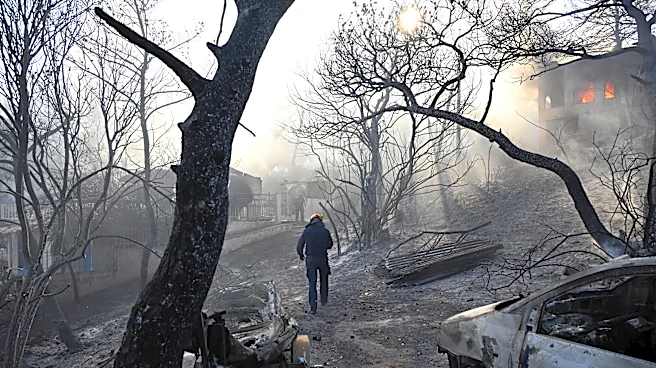
citizens, aged 46, 45, and 42, and a 33-year-old Polish citizen. The arrests followed a public report of a fire being started alongside a road in the wider Benkovac area. Police quickly located the suspects in a car with Zadar registration plates. Investigations revealed that the four individuals acted according to a pre-arranged plan, intentionally starting fires on August 14 and 15 using open flames or flammable materials ignited with a lighter. The fires occurred in areas including Bili Brig in Zadar, Zemunik Donji, Galovac, Donje Biljane, Zapužane, Zemunik, Zagrad, Lišane Tinjanske, Škabrnja, and Benkovac. One fire completely destroyed a parked vehicle in Bili Brig, and another destroyed 43 olive trees between Škabrnja and Zemunik Donji. Firefighters, assisted by Croatia’s aerial firefighting forces, extinguished the blazes, which caused significant material damage.
Why It's Important?
The deliberate setting of multiple fires poses a significant threat to public safety, property, and natural resources, especially in regions prone to wildfires. The destruction of a parked vehicle and 43 olive trees highlights the direct economic and personal losses incurred by such acts. Olive trees, in particular, represent a long-term agricultural investment and a vital part of the local economy and landscape. The involvement of both Croatian and Polish citizens suggests a potential cross-border element to criminal activities, which could prompt increased international cooperation in law enforcement. The swift response by the Zadar Police Department, triggered by a public tip, underscores the importance of community vigilance in preventing and addressing criminal acts. The seizure of a semi-automatic rifle, ammunition, and a pistol during searches of the suspects' homes indicates potential broader criminal implications beyond arson, raising concerns about illegal firearms possession and organized criminal behavior.
What's Next?
The four suspects have been handed over to the detention supervisor, and a criminal complaint has been submitted to the Municipal State Attorney’s Office in Zadar. The investigation is ongoing, with police cooperating with prosecutors to establish all facts. The final legal classification of the alleged offenses will depend on the evidence gathered during these proceedings. Further assessments are continuing to determine the full extent of the material damage caused by the fires. The police have not yet released the names of the arrested individuals. This case will likely proceed through the Croatian legal system, potentially leading to charges of arson and illegal possession of firearms. The outcome of the investigation and subsequent legal actions will determine the penalties for those involved and may influence future strategies for fire prevention and law enforcement in the region.
Beyond the Headlines
This incident highlights the broader issue of arson and its devastating consequences, particularly in areas susceptible to environmental damage. Beyond the immediate destruction, such acts can lead to long-term ecological impacts, including soil erosion, habitat loss, and air pollution. The deliberate nature of these fires suggests a malicious intent that goes beyond accidental causes, raising questions about motives, which could range from personal vendettas to more organized criminal activities. The involvement of a foreign national also brings into focus the complexities of international crime and the need for robust cross-border intelligence sharing. The community's role in reporting suspicious activities was crucial in this case, emphasizing the importance of public engagement in maintaining safety and security. This event serves as a stark reminder of the vulnerability of both natural and built environments to intentional destruction and the continuous efforts required by law enforcement to combat such threats.