







What's Happening?
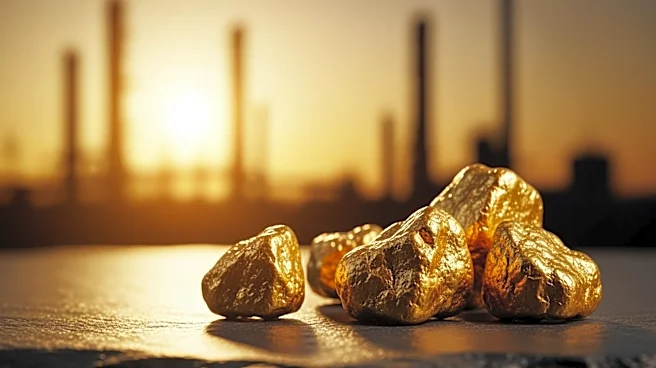
Ghana is aiming to increase the portion of gold output that large-scale mines must sell to the central bank from 20% to 30%. This move is intended to enhance local refining capabilities and bolster the country's foreign-exchange reserves. The central bank plans
to purchase the gold as doré, or unrefined gold, to support local refineries. This initiative comes as gold prices remain high, and Ghana seeks to capture more value from its natural resources. The government has proposed buying the doré at a 1% discount to the spot price, with implementation potentially starting as early as June 1, pending agreement on pricing.
Why It's Important?
This policy shift is significant for Ghana's economy, as gold is a major export commodity, accounting for 67% of exports in 2025. By increasing local refining, Ghana aims to create jobs and add value to its gold production, which could lead to greater economic stability and growth. The move also reflects a broader trend among resource-rich African nations to retain more value from their commodities. For international mining companies operating in Ghana, such as AngloGold Ashanti and Newmont Corp., this policy could impact their operations and financial strategies.
What's Next?
Negotiations between the Ghanaian government and mining companies are ongoing, with discussions focusing on the pricing and logistics of the increased gold sales to the central bank. If an agreement is reached, the new policy could be implemented soon, potentially affecting the operations of major mining companies. The success of this initiative could serve as a model for other African countries seeking to maximize the benefits of their natural resources.