








What's Happening?
The Japan Civil Aviation Bureau (JCAB) has approved Loft Dynamics' virtual-reality helicopter simulator as a Level 7 flight training device. This approval makes JCAB the third regulator, following the European Union Aviation Safety Agency and the FAA,
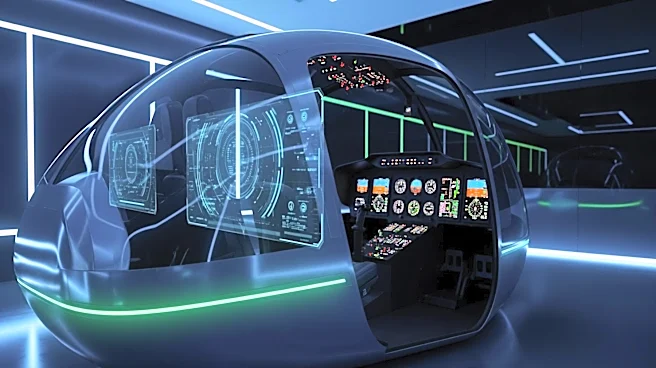
to qualify the simulator. The Airbus H125 TXi simulator, operated by Nakanihon Air, is the first Level 7 VR helicopter flight training device in Japan and the Asia-Pacific region. Located at Nagoya Airport, the simulator is designed to support both initial and recurrent helicopter training under JCAB's framework. It offers training in cockpit familiarization, procedural training, systems operation, and emergency procedures, among other tasks. The simulator allows for more training repetitions and scenario exposure, enhancing pilots' procedural proficiency and emergency response skills before actual helicopter training.
Why It's Important?
This development is significant as it enhances the training capabilities for helicopter pilots in Japan, a major helicopter market in Asia. The approval of the VR simulator by JCAB provides a structured pathway for immersive VR helicopter training, which can lead to more efficient and effective pilot training. By moving more training scenarios from the aircraft to the simulator, pilots can gain valuable experience in a controlled environment, potentially reducing the need for extensive in-aircraft training. This can lead to cost savings and increased safety in pilot training programs. Additionally, the availability of high-fidelity simulator training in Japan addresses a previous limitation in the region, potentially setting a precedent for other countries to follow.
What's Next?
With the JCAB's approval, it is likely that more helicopter operators in Japan and the Asia-Pacific region will adopt VR simulators for training purposes. This could lead to further advancements in VR training technology and its integration into pilot training programs. As more data is gathered from the use of these simulators, there may be opportunities to expand their use cases and further reduce the reliance on traditional aircraft training. The aviation industry will be watching closely to see how this technology impacts training efficiency and safety outcomes.