






What's Happening?
An autopsy report from the West Tennessee Regional Forensic Center has revealed that Tyrin Johnson, a 20-year-old Black man, was shot in the back by members of the Tennessee National Guard in downtown Memphis on July 5. The report indicates a bullet entered
Johnson's right side and exited through his upper chest, with a forensic pathologist noting an upward trajectory consistent with him running away. This finding directly contradicts initial statements from authorities, including Memphis police and a National Guard report, which claimed Johnson turned towards soldiers with a handgun and was shot in the chest. Johnson's family has been seeking evidence, including video footage, for nearly two months, and the physical evidence now raises serious questions about the government's narrative. The medical examiner classified Johnson's death as a homicide, prompting calls for a transparent and independent investigation.
Why It's Important?
This discrepancy between official accounts and forensic evidence highlights significant concerns regarding transparency and accountability in law enforcement and military operations within civilian areas. The incident occurred during a military deployment, the Memphis Safe Task Force, which aimed to enhance public safety but has now resulted in a young man's death under disputed circumstances. The case raises questions about the militarization of policing and the potential for abuses of state authority, particularly concerning constitutional rights and the truth provided to families of victims. The public's trust in government institutions, including law enforcement and the National Guard, is at stake, especially in communities where such incidents disproportionately affect minority populations. The financial cost of the Memphis deployment, estimated at $319 million by Smart City Memphis, further underscores the need for demonstrable effectiveness and accountability, beyond mere arrest totals or claims of reduced crime.
What's Next?
The Tennessee Bureau of Investigation's inquiry into Johnson's death remains open, but there are strong demands for a genuinely independent and transparent investigation. This includes the release of all pertinent recordings, such as surveillance footage, vehicle-camera recordings, police radio communications, and body-worn camera footage from Memphis police officers. The identities of the soldiers who fired their weapons, the number of shots fired, and their positions must also be disclosed. If evidence suggests Johnson did not pose an imminent threat when he was shot, there are calls for criminal charges against those responsible, emphasizing that legal standards should apply equally to National Guard members. Elected officials are urged to demand the release of footage, hold public hearings, and refuse to expand or fund the Memphis Safe Task Force without meaningful civilian oversight, especially with an election approaching in November.
Beyond the Headlines
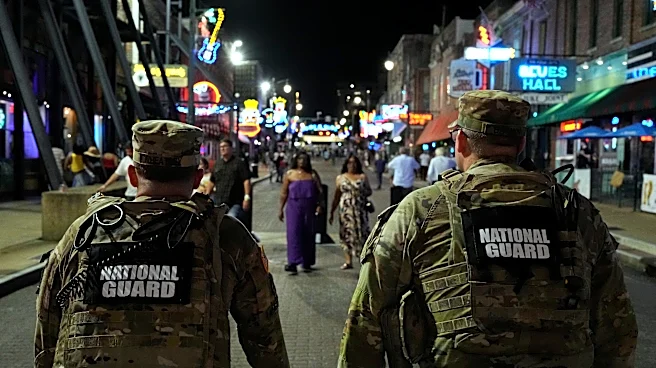
The incident transcends a single shooting, touching upon the broader implications of the militarization of public safety and its impact on civil liberties. The deployment of the National Guard in civilian policing, as part of the Memphis Safe Task Force, represents a shift in law enforcement strategy that critics argue blurs the lines between military and civilian roles. This case underscores the ethical dilemma of using military forces for domestic law enforcement, particularly when initial accounts of events are contradicted by forensic evidence. The long-term societal impact could include increased distrust between communities and authorities, especially among Black families who perceive a separate system of justice for state agents. The outcome of this investigation and the subsequent actions taken will set a precedent for how similar incidents are handled, influencing public policy on police accountability, military involvement in civilian affairs, and the protection of constitutional rights.