

What's Happening?
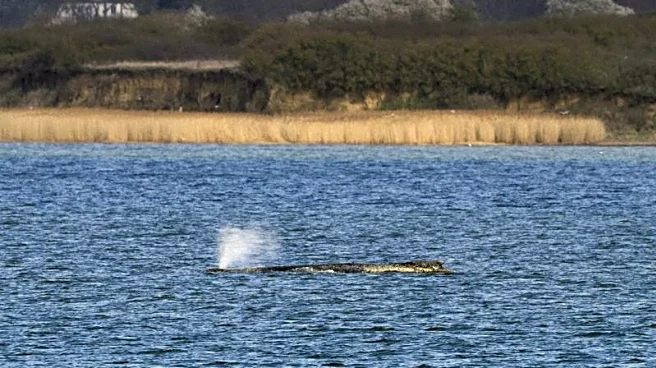
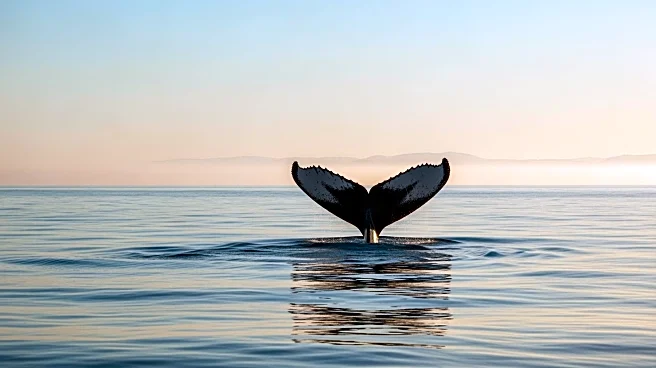
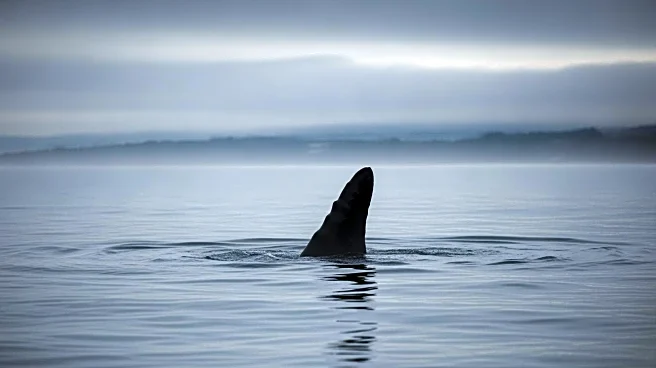
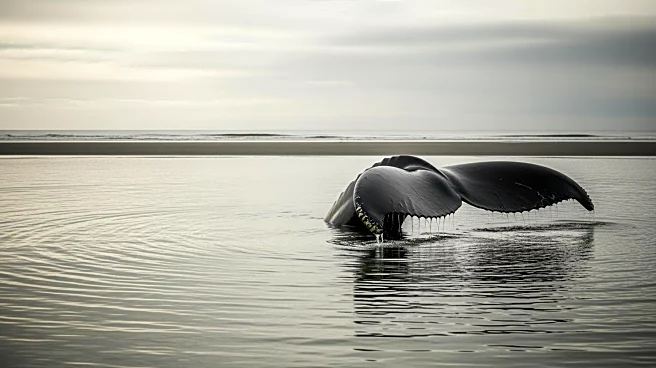
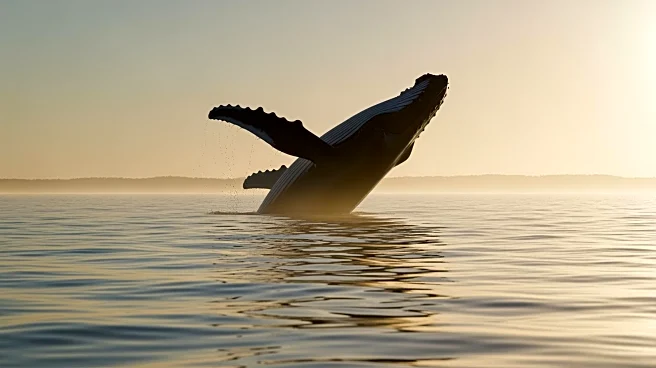
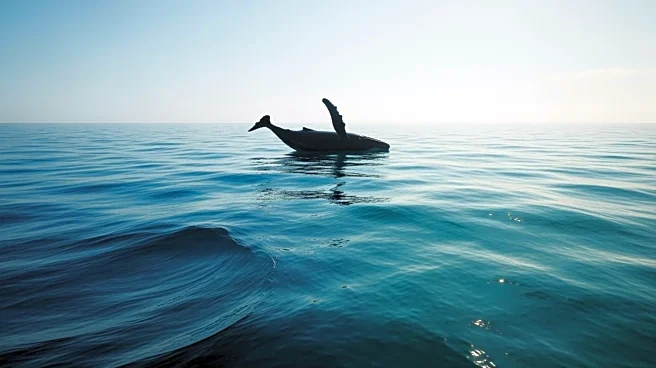
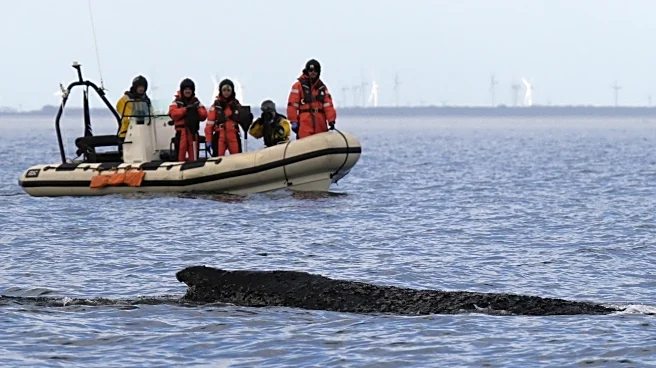
A humpback whale that was stranded for days at a Baltic Sea resort in Germany has managed to swim free from a sandbank after a rescue effort involving an excavator digging an escape channel. The whale, measuring 12-15 meters in length, was initially stuck
on an underwater sandbank near Timmendorfer Strand. Despite efforts by the coast guard and fire department to create waves to free it, the whale remained trapped until the channel was dug. The whale is now swimming in deeper waters off Lübeck Bay, accompanied by a coast guard ship and several boats. Experts believe the whale is a young male, as males tend to migrate, and it faces a journey of several hundred kilometers through German and Danish waters to reach the North Sea.
Why It's Important?
The successful freeing of the whale is a significant step in marine conservation efforts, highlighting the challenges faced by marine mammals in non-native environments. The whale's journey through the Baltic Sea, which lacks strong tides, underscores the importance of human intervention in wildlife rescue operations. The event draws attention to the need for continued monitoring and support for marine life, especially in regions where they are not typically found. The whale's situation also raises awareness about the impact of environmental changes on marine migration patterns and the role of rescue operations in mitigating these effects.
What's Next?
The whale's journey to the North Sea is crucial for its survival, as it needs to reach the Atlantic Ocean to return to its natural habitat. Rescuers are optimistic that the whale will continue swimming north towards Denmark. However, the whale's condition remains a concern, as it was unable to be fitted with a tracker due to its poor state. Continued monitoring by marine biologists and coast guard vessels will be essential to ensure the whale's safe passage through the Baltic Sea.