







What's Happening?
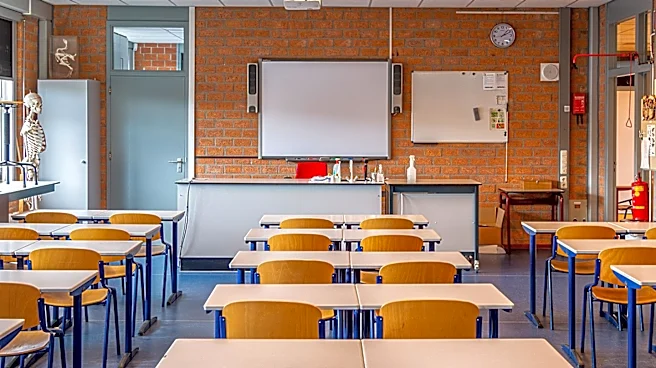
An 8-foot python named Nanner is being blamed by fire officials for starting a fire at Forest Middle School in Bedford County, Virginia. Firefighters responding to an alarm found a fire on the second floor and encountered the large snake underneath a desk
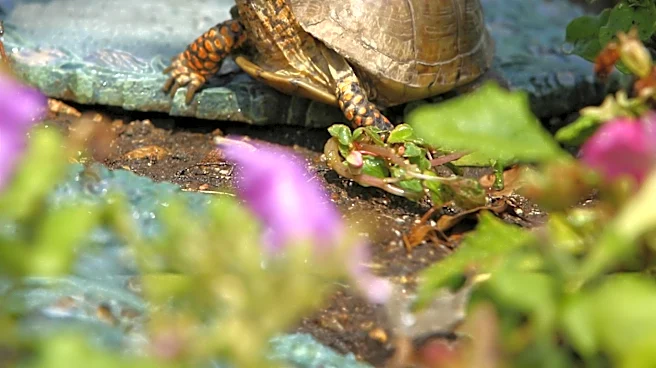
in a classroom. The Fire Marshal’s Office believes the fire started after the python escaped its cage and knocked over a heat lamp. However, Brittany Jacobs, a life science teacher at the school and the snake's owner, disputes this claim. Jacobs stated in a Facebook post that Nanner broke out of her tank after the fire had already begun, seeking to escape the intense heat. She also mentioned that a tortoise was killed in the fire and that eight classrooms sustained water damage from the sprinkler system.
Why It's Important?
This unusual incident highlights the potential hazards associated with keeping animals, particularly exotic ones, in public educational settings. While intended for educational purposes, the presence of such animals introduces unforeseen risks, including fire safety concerns and potential harm to other animals. For the school, the fire resulted in significant damage to eight classrooms, disrupting the learning environment and incurring repair costs. The event also raises questions about school policies regarding classroom pets and the safety protocols in place for animal enclosures and heating elements. The differing accounts from fire officials and the teacher underscore the complexities in determining causation in such unique circumstances, potentially leading to further investigations and policy reviews.
What's Next?
The Fire Marshal’s Office will likely continue its investigation to definitively determine the cause of the fire, considering both the official theory and the teacher's account. The school administration will need to assess the damage, coordinate repairs, and potentially review or revise its policies regarding animals in classrooms. Brittany Jacobs has stated she has removed all animals from her classroom, indicating a shift in her teaching approach. The incident may prompt other school districts to re-evaluate their own policies on classroom pets, especially those involving reptiles or animals requiring specialized heating equipment. The community will be looking for assurances that such an incident will not recur and that safety measures are robust.
Beyond the Headlines
Beyond the immediate cause of the fire, this event touches upon broader themes of educational practices, animal welfare, and risk management in public institutions. The teacher's use of animals as teaching tools, while well-intentioned, brings to light the ethical considerations and practical challenges of maintaining a mini-ecosystem within a school environment. It also opens a discussion about the balance between experiential learning and ensuring a safe environment for all students and staff. The incident could lead to a re-evaluation of the types of animals deemed appropriate for classroom settings and the necessary safety infrastructure to support them, potentially influencing educational guidelines nationwide regarding live animal exhibits in schools.