



What's Happening?
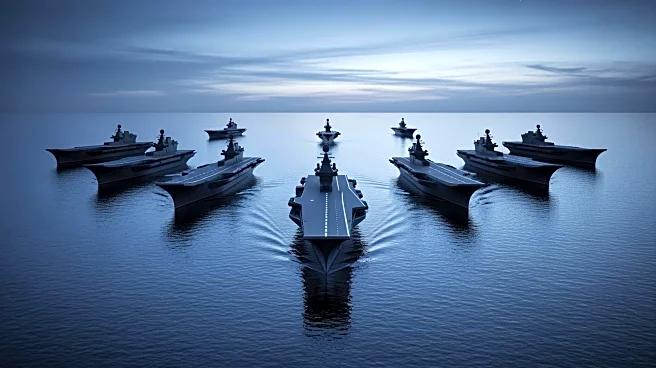
The Pentagon's annual assessment of the People's Liberation Army reveals that China plans to expand its naval capabilities significantly by building nine aircraft carriers by 2035. Currently, the Chinese PLA Navy is the largest in the world by vessel
count and is rapidly modernizing. The expansion aims to enhance China's ability to control the Western Pacific. China's carrier technology has advanced since the relaunch of the Liaoning in 2012, with subsequent developments like the Shandong and the high-tech Fujian. Future carriers may incorporate nuclear power, further boosting China's naval strength. This expansion could shift the balance of power in the region, as China's geographic focus allows for concentrated naval efforts in the Indo-Pacific.
Why It's Important?
China's plan to build nine aircraft carriers represents a significant shift in naval power dynamics, particularly in the Western Pacific. This expansion could challenge U.S. naval dominance, as China's carriers would be able to operate more efficiently due to shorter supply lines and focused regional interests. The U.S. Navy, with its global commitments, may find it challenging to match China's concentrated presence in the Indo-Pacific. This development could lead to increased tensions and a potential arms race in the region, affecting global maritime security and U.S. strategic interests.
What's Next?
As China progresses with its carrier expansion, the U.S. and its allies may need to reassess their naval strategies in the Indo-Pacific. This could involve increasing naval presence, enhancing alliances, and investing in advanced technologies to counterbalance China's growing capabilities. Diplomatic efforts may also intensify to address the potential for increased regional tensions and to ensure stability in international waters.