

What's Happening?
A powerful nor'easter is set to bring blizzard conditions to the Mid-Atlantic and Northeast regions of the United States, starting Sunday night and continuing through Monday. The storm is expected to rapidly intensify off the Mid-Atlantic coast, affecting
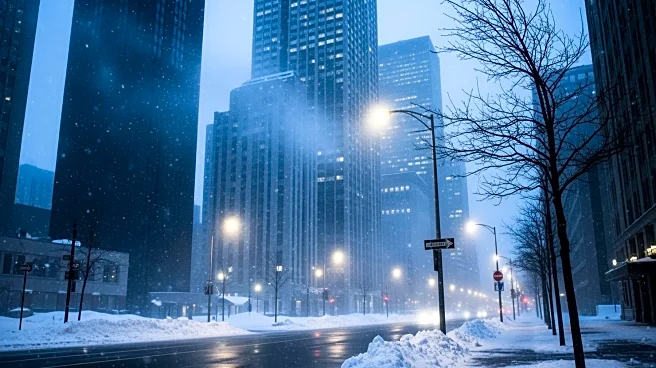
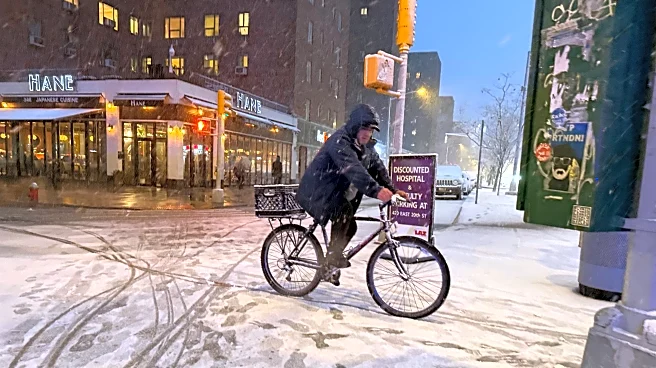
approximately 65 million people with weather alerts and 35 million under blizzard warnings. The National Weather Service has described the storm as potentially historic and destructive, with forecasts predicting up to 2 feet of snow in the hardest-hit areas, including southern New England. New York City Mayor Zohran Mamdani has announced a citywide travel ban starting at 9 p.m. Sunday, with public schools closed on Monday. The storm is expected to create whiteout conditions, with travel restricted to emergencies only.
Why It's Important?
The impending blizzard poses significant challenges for the affected regions, potentially disrupting transportation, power supply, and daily activities. The travel ban in New York City highlights the severity of the storm, aiming to ensure public safety by reducing the risk of accidents and allowing emergency services to operate more effectively. The heavy snowfall and strong winds could lead to power outages, structural damage, and coastal flooding, impacting both urban and rural communities. The storm's timing, coinciding with the start of the workweek, could lead to widespread disruptions in business operations and public services, emphasizing the need for preparedness and caution.
What's Next?
As the storm progresses, emergency services and local governments will continue to monitor conditions and provide updates to the public. Residents in the affected areas are advised to stay informed through official channels and adhere to safety guidelines, including staying indoors and avoiding non-essential travel. The storm is expected to move out of northern New England by Tuesday morning, but residual effects such as blowing snow and coastal flooding may persist. Authorities will likely focus on clearing roads, restoring power, and assessing damage in the aftermath of the storm.