



What's Happening?
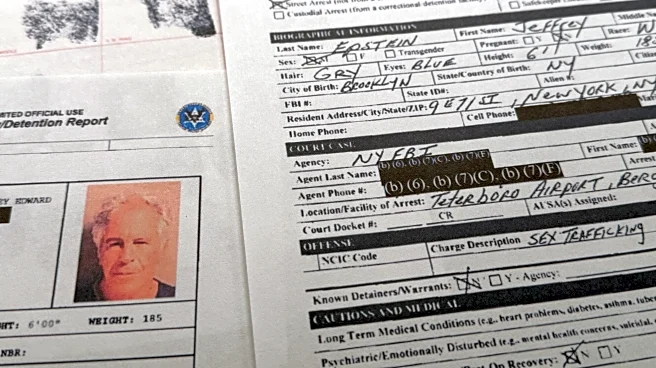
The release of the Epstein files has resulted in a wave of resignations and public apologies from several high-profile individuals. Health influencer Peter Attia resigned from a protein-bar company after emails revealed his crude banter with Epstein.
CBS News pulled a segment featuring Attia, and Brad Karp stepped down as chair of the law firm Paul Weiss after praising Epstein in an email. Queen's University Belfast removed former U.S. Senator George Mitchell's name from its peace institute due to his association with Epstein. The files suggest Epstein scheduled a meeting with Mitchell as recently as 2013. The files have led to numerous public figures issuing statements denying illegal activities and apologizing for their association with Epstein.
Why It's Important?
The Epstein files have significant implications for public perception and accountability among influential figures. The resignations and apologies highlight the societal expectation for transparency and ethical conduct, especially when associated with individuals involved in criminal activities. The files have reignited discussions about the extent of Epstein's network and the potential complicity of his acquaintances. This development underscores the importance of scrutinizing relationships between powerful individuals and those accused of serious crimes, potentially influencing public trust in institutions and leaders.
What's Next?
As the Epstein files continue to be examined, more revelations about the extent of Epstein's network and the involvement of other high-profile individuals may emerge. This could lead to further resignations and public scrutiny. Legal actions may be pursued against those implicated, and institutions may implement stricter policies to prevent similar associations in the future. The ongoing analysis of the files will likely keep the issue in the public eye, prompting discussions about accountability and ethical standards.
Beyond the Headlines
The Epstein files reveal the complex dynamics of power, influence, and ethical conduct among the elite. The assumption that association with Epstein implies guilt reflects broader societal concerns about complicity and moral responsibility. The files challenge the notion of a grand conspiracy, suggesting instead that Epstein's network was built on personal relationships rather than systematic trafficking. This raises questions about the nature of wealth, influence, and the ability of individuals to overlook unethical behavior for personal gain.