



What's Happening?
The Joro spider, an invasive species from East Asia, is rapidly spreading across the United States. First identified in Georgia in 2013, these spiders have now been reported in at least 12 states, including Tennessee, North Carolina, South Carolina, California,
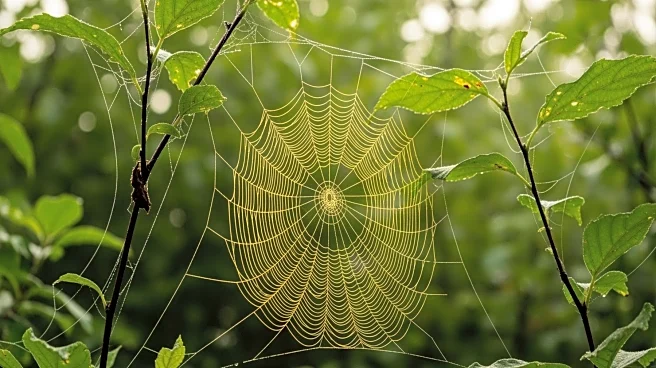
Virginia, Maryland, Pennsylvania, and Mississippi. The Joro spider is known for its ability to 'balloon' using silk strands to travel long distances by air. This adaptation has allowed it to penetrate deeper into the U.S., with potential to invade the Northeast. The female Joro spider can grow up to four inches, and while they are venomous, they pose no significant threat to humans. However, there is concern about their impact on native spider populations.
Why It's Important?
The spread of the Joro spider highlights the challenges of managing invasive species in the U.S. These spiders have adapted well to urban environments, which could lead to significant ecological impacts, particularly the displacement of native spider species. The ability of the Joro spider to thrive in various climates and urban settings underscores the need for effective monitoring and management strategies. The ecological balance could be disrupted, affecting local biodiversity and potentially leading to unforeseen consequences in the food chain. The situation calls for increased public awareness and scientific monitoring to mitigate potential environmental impacts.
What's Next?
As the Joro spider continues to spread, ecologists are urging the public to report sightings to platforms like iNaturalist or Joro Watch. This data will help scientists track the spider's distribution and assess its ecological impact. There may be increased efforts to educate the public on how to manage these spiders if they become a nuisance. Additionally, researchers may explore further studies on the spider's adaptability and potential control measures to prevent further spread and ecological disruption.
Beyond the Headlines
The Joro spider's spread raises questions about the broader implications of global trade and climate change on invasive species. The spider's initial arrival in the U.S. via shipping containers highlights the role of global commerce in the spread of non-native species. Furthermore, the spider's ability to withstand colder temperatures suggests that climate change could facilitate the spread of other invasive species. This situation underscores the importance of international cooperation and policy-making in addressing the challenges posed by invasive species.