





What's Happening?
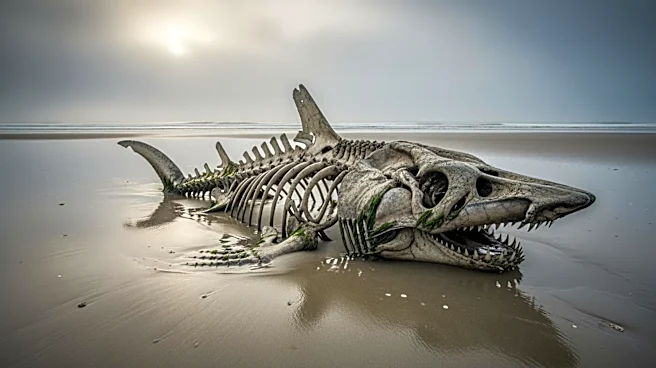
Beachcombers in County Sligo, Ireland, discovered the carcass of a Greenland shark, a species known for its extraordinary lifespan of up to 500 years. This marks the first recorded stranding of the species in Ireland. The shark, estimated to be 150 years old,
was initially mistaken for a basking shark. The Irish Whale and Dolphin Group confirmed its identity and collected the specimen for further study. Greenland sharks are among the longest-living vertebrates and can grow over 20 feet long. They inhabit the deep, cold waters of the Arctic and North Atlantic, preying on various marine animals. Despite their intimidating appearance, they pose no threat to humans due to their cold habitat.
Why It's Important?
The discovery of the Greenland shark carcass provides a rare opportunity for scientists to study this elusive species, which is typically found in deep, frigid waters. Understanding the biology and ecology of such long-lived creatures can offer insights into aging and longevity, potentially benefiting scientific research in these areas. Additionally, the event highlights the importance of marine conservation and the need to protect these ancient species from environmental threats. The stranding also raises awareness about the biodiversity of marine life and the ecological significance of preserving ocean habitats.
What's Next?
The Natural History Museum will conduct further examinations of the shark to gather more data on its age, health, and environmental conditions. This research could contribute to broader studies on marine life longevity and adaptation to extreme environments. Conservationists may use this incident to advocate for increased protection measures for deep-sea habitats, ensuring the survival of species like the Greenland shark. The findings could also inform public policy on marine conservation and climate change impacts on ocean ecosystems.