





What's Happening?
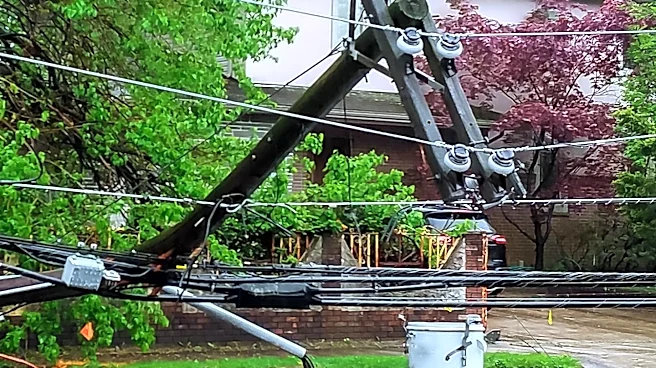
Gilbert Kirk, a resident of Wyandotte County, Kansas, received unexpected assistance from a community member to tarp his storm-damaged home. Kirk had been seeking a tarp for his roof, which was compromised after a tree crashed through it, trapping him
and his dog, Beatle, for hours. A stranger approached Kirk, promising to return with materials and a crew to cover the damaged roof. Despite initial skepticism, Kirk witnessed the individual return with lumber and additional trucks, leading to the successful tarping of his home. This act of kindness has allowed the water inside Kirk's home to begin drying out, a significant relief after weeks of exposure to the elements. Kirk expressed profound gratitude for the community's support.
Why It's Important?
This event highlights the critical role of community solidarity and individual initiative in disaster recovery efforts, particularly in situations where residents may face delays or difficulties in securing official aid. For individuals like Gilbert Kirk, who experienced a traumatic event and subsequent prolonged exposure to the elements, immediate assistance can significantly mitigate further damage and improve living conditions. The story underscores the human element of resilience and neighborly support in the face of adversity, demonstrating how direct community action can provide timely and effective relief. It also implicitly points to potential gaps in rapid response or resource allocation for individual homeowners following natural disasters, making the intervention of private citizens even more impactful.
What's Next?
While Kirk's home is now covered, he is still seeking additional assistance to complete the necessary repairs and move back inside. The immediate next step for Kirk will likely involve securing further resources, potentially through community fundraising, local aid organizations, or insurance claims, to undertake more permanent structural repairs. The community's continued support will be crucial in helping Kirk fully recover from the storm damage. This situation may also prompt local discussions on improving rapid response mechanisms for individual homeowners affected by severe weather events, ensuring that others do not have to rely solely on spontaneous acts of kindness for immediate relief.
Beyond the Headlines
This incident transcends a simple act of charity, touching upon broader themes of social responsibility and the power of human connection in times of crisis. In an era where reliance on formal institutions is prevalent, this story serves as a powerful reminder of the impact of direct, person-to-person aid. It could inspire other communities to foster similar networks of support, creating a more robust and responsive local safety net. Furthermore, it subtly questions the efficiency and accessibility of existing disaster relief frameworks for individual cases, suggesting that while official channels are vital, community-led initiatives often fill critical immediate needs and foster a stronger sense of collective well-being and mutual aid.