





What's Happening?
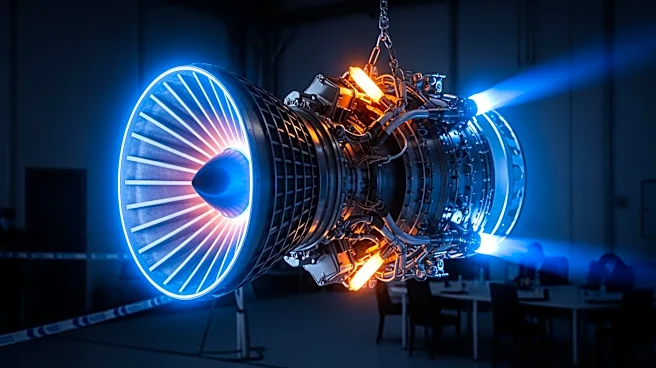
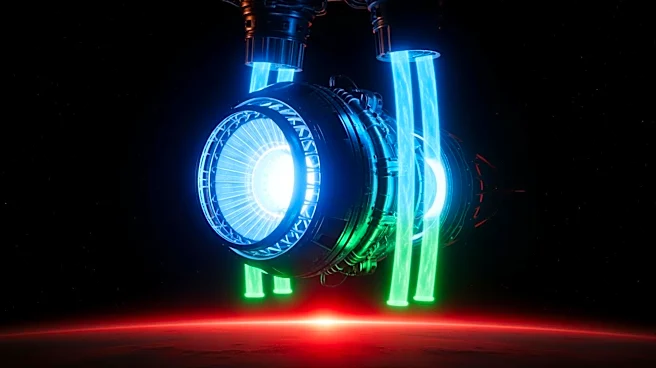
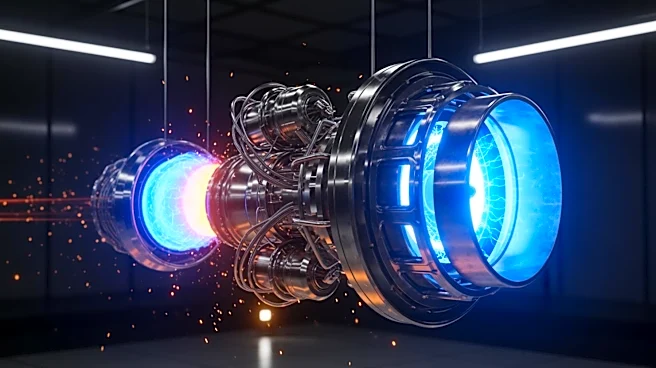
NASA engineers have successfully tested a next-generation electric propulsion system that could revolutionize space travel, particularly for missions to Mars. The new lithium-plasma engine achieved a record power level of 120 kilowatts, significantly
surpassing the capabilities of current electric thrusters. This engine uses lithium metal vapor as fuel and is designed to be more efficient than traditional chemical rockets, potentially saving up to 90% of fuel. The test marks a significant milestone in NASA's efforts to develop propulsion systems capable of supporting human missions to Mars, which are estimated to require 2 to 4 megawatts of power. The engine's ability to withstand extreme temperatures and operate continuously for extended periods is crucial for the success of such missions.
Why It's Important?
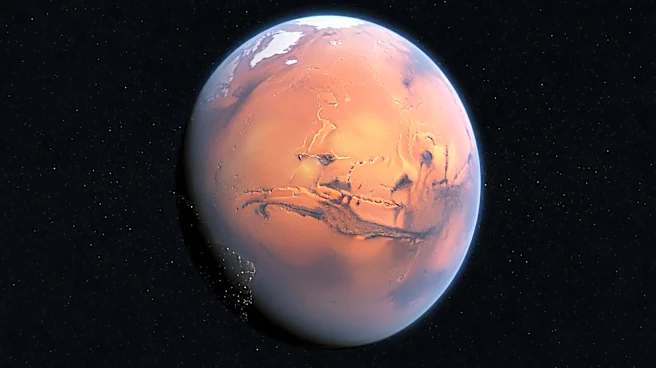
The development of this advanced propulsion system is a critical step towards enabling human exploration of Mars. By achieving higher power levels and greater fuel efficiency, NASA can reduce the logistical challenges and costs associated with long-duration space missions. This technology could significantly shorten travel times to Mars, making it feasible to send larger spacecraft with the necessary supplies for human crews. The successful test of the lithium-plasma engine demonstrates NASA's progress in overcoming the technical hurdles of deep space exploration, potentially paving the way for future manned missions to the red planet and beyond.
What's Next?
NASA plans to continue refining the lithium-plasma engine technology, focusing on scaling up power levels to meet the demands of human missions to Mars. Future tests will aim to increase the engine's power output to the required 2 to 4 megawatts and ensure its reliability over the extended duration of a Mars mission. As the technology matures, NASA will also need to address other challenges, such as spacecraft design and life support systems, to support human exploration of Mars. The success of these efforts could lead to the first manned mission to Mars within the next few decades.