


What's Happening?
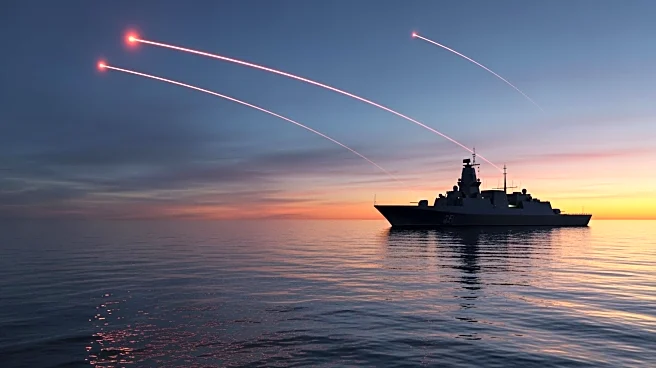
China's development of long-range ballistic missiles, capable of targeting U.S. warships off the West Coast, is highlighted in a recent Pentagon report. The DF-27 intercontinental ballistic missile, with a range of up to 4,970 miles, can reach Alaska,
Hawaii, and much of the U.S. West Coast. This missile, along with other Chinese missile types, poses a significant threat to U.S. military operations in the Asia-Pacific region. The report emphasizes China's missile-centered strategy aimed at restricting U.S. forces' access and operations in the western Pacific.
Why It's Important?
The expansion of China's missile capabilities represents a strategic challenge to U.S. military dominance in the Pacific. The ability to target U.S. naval assets could deter American intervention in regional conflicts, particularly concerning Taiwan. This development necessitates a reassessment of U.S. defense strategies and the strengthening of naval defenses to ensure the survivability of U.S. ships operating in the Pacific. The growing missile threat underscores the need for enhanced missile defense systems and strategic planning to counter China's military advancements.
What's Next?
The U.S. military may need to invest in advanced missile defense technologies and strengthen its naval presence in the Pacific to counter China's missile threat. This could involve deploying additional assets to key locations and enhancing cooperation with regional allies. The Pentagon's report may lead to policy discussions on how to address the strategic challenges posed by China's military capabilities.