





What's Happening?
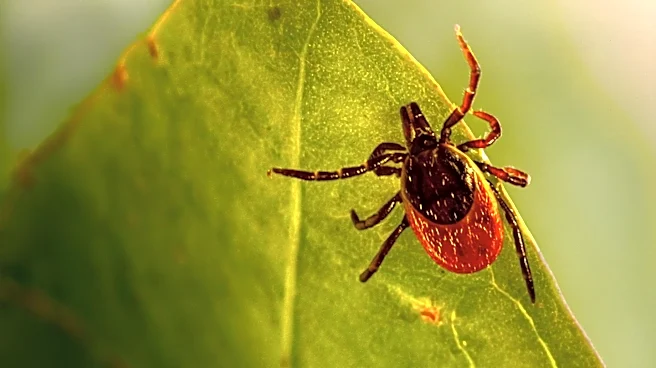
A new model developed by TickZone has identified high potential for tick encounters across all communities in Franklin County, Maine. The model, which combines Lyme disease data with satellite land-cover information and weather patterns, rates each community's
risk level. Temple, Weld, Sandy River Plantation, Carrabassett Valley, and Carthage received the highest scores, indicating significant tick activity. The model aims to provide a general precautionary signal rather than predict specific infections. It highlights the importance of taking preventive measures against tick-borne diseases, particularly during peak tick activity seasons.
Why It's Important?
The findings from TickZone's model are crucial for public health awareness and prevention efforts in Franklin County. With Lyme disease being a significant concern in the region, understanding areas of high tick activity can help residents and visitors take necessary precautions. The model's data-driven approach provides valuable insights for local health authorities and the public, potentially reducing the incidence of tick-borne diseases. It also underscores the need for continued research and monitoring of tick populations and their impact on public health.
What's Next?
The model's developers are seeking partnerships with universities or health organizations to validate the town-level rankings through field sampling. Such collaborations could enhance the model's accuracy and reliability, providing more precise data for public health interventions. Additionally, the model's expansion to other regions could offer broader insights into tick activity and disease prevention strategies across the country.
Beyond the Headlines
The development of the TickZone model highlights the growing role of technology and data analytics in public health. It demonstrates how innovative approaches can enhance disease surveillance and prevention efforts. The model also raises awareness about the environmental factors contributing to tick populations, emphasizing the need for integrated pest management and habitat modification strategies to mitigate risks.