





What's Happening?
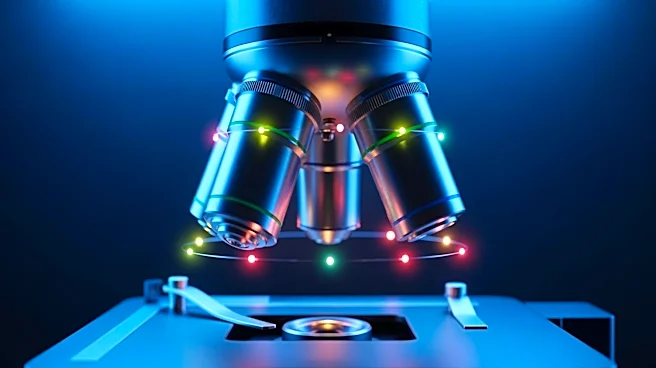
A new method called brightness demixing has been developed to improve multi-target imaging in single-molecule localization microscopy. This technique allows for the discrimination of fluorophores based on brightness, which is determined by the fluorophore's
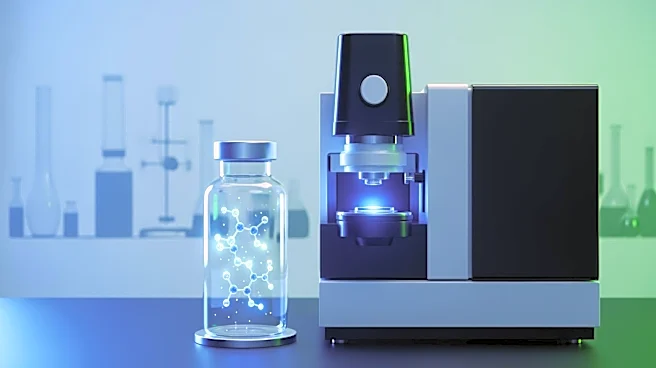
extinction coefficient and quantum yield. By oversampling blinking events, researchers can quantify photon flux to differentiate fluorophores without relying on spectral separation. This method operates within a single detection channel, eliminating the need for additional spectral filters or cameras, and is compatible with existing microscopy setups.
Why It's Important?
Brightness demixing represents a significant advancement in super-resolution microscopy, enhancing the ability to image multiple targets simultaneously. This method simplifies the imaging process by reducing the need for complex spectral separation techniques, making it more accessible and efficient. The ability to perform multi-target imaging with high precision has implications for various fields, including biological research and medical diagnostics, where detailed cellular imaging is crucial.
What's Next?
The adoption of brightness demixing in microscopy could lead to broader applications in research and diagnostics. As the method becomes more widely used, it may drive further innovations in imaging technology, potentially leading to new discoveries in cellular biology and disease mechanisms.