





What's Happening?
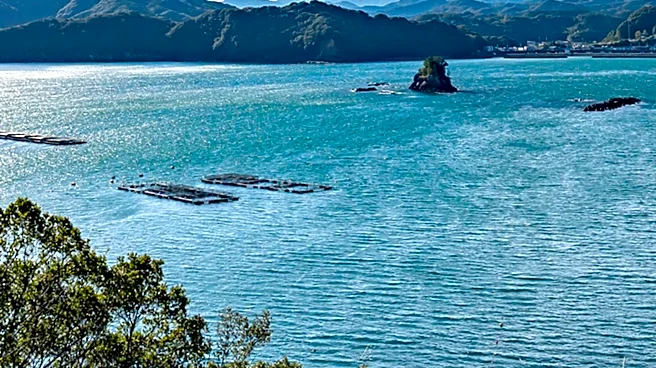
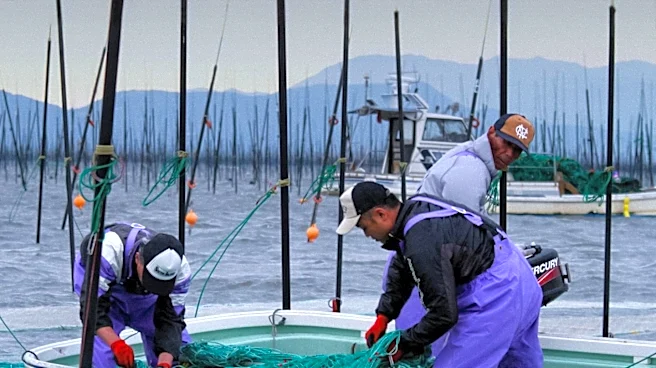
Fishery workers in Hiroshima Prefecture, western Japan, have commenced the harvesting of farmed oysters, a month later than usual. This delay is attributed to extreme heatwaves experienced during the summer, which are believed to have hindered the shellfish's
growth. The regional specialty's harvesting season officially began on Monday. Oyster farmers in Hatsukaichi City used cranes to raise 10-meter-long cultivation wires from rafts. Last year, Hiroshima's oyster population suffered significant losses, with the prefectural government reporting a production decrease of over 40% compared to the average. Despite various protective measures implemented, some areas are reporting that approximately 80% of oysters have already died, raising concerns among farmers about their ability to ship the product.
Why It's Important?
The significant delay and reduction in oyster harvest in Hiroshima due to extreme weather highlight the increasing vulnerability of agricultural and aquaculture industries to climate change. For the U.S., this situation serves as a cautionary tale, as similar climate-related disruptions could impact domestic seafood production and agricultural yields. A decrease in global seafood supply, even from a regional event in Japan, can lead to increased import prices for the U.S., affecting consumers and businesses in the food service industry. Furthermore, it underscores the economic instability faced by local communities heavily reliant on specific industries, prompting discussions on climate resilience and diversification strategies for coastal economies. The challenges faced by Hiroshima's oyster farmers could influence investment in climate-adaptive technologies and practices in U.S. aquaculture.
What's Next?
Oyster farmers in Hiroshima face an uncertain season, with concerns about the volume of oysters they will be able to ship. The long-term implications for the region's oyster industry will depend on the success of the current harvest and the effectiveness of ongoing protective measures against future extreme weather events. Researchers and agricultural authorities will likely continue to investigate the precise impact of heatwaves on oyster growth and mortality to develop more robust mitigation strategies. For consumers, particularly those in Japan, the reduced supply could lead to higher prices and limited availability of this regional delicacy. The situation may also prompt a broader reevaluation of aquaculture practices in the face of a changing global climate.
Beyond the Headlines
This event transcends a simple agricultural setback, pointing to a larger narrative about the global food supply chain's fragility in the face of environmental shifts. The 80% mortality rate in some areas suggests a potential ecological tipping point, where traditional farming methods are no longer sufficient. It raises ethical questions about sustainable aquaculture and the balance between economic demand and environmental preservation. The incident could also spur innovation in climate-controlled farming or genetic research to develop more heat-resistant oyster strains. Culturally, the oyster is a significant part of Hiroshima's identity and cuisine, and its decline could impact local traditions and tourism, highlighting the interconnectedness of environment, economy, and culture.