








What's Happening?
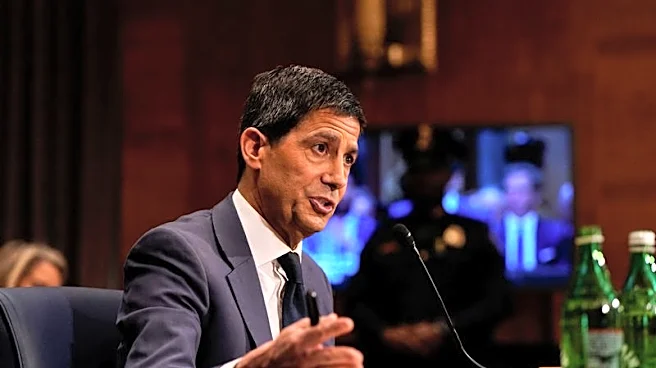
Kevin Warsh has been confirmed as the new Chair of the Federal Reserve by the U.S. Senate, with a narrow margin of 54 votes to 45. This confirmation is seen as a significant policy shift, reflecting deeper structural trends in U.S. monetary policy. Warsh's
leadership is expected to continue the politicization of monetary policy and the diversification of global central banks away from dollar-denominated assets. This shift is not a new crisis but a reflection of existing instability, with gold becoming a key asset in global reserve portfolios. The confirmation comes amid a backdrop of geopolitical tensions and economic fragmentation, with central banks increasingly turning to gold as a hedge against dollar volatility and geopolitical risks.
Why It's Important?
Warsh's confirmation is crucial as it highlights the ongoing politicization of U.S. monetary policy and the global shift away from dollar reliance. This has significant implications for international finance, as central banks in the Global South are increasingly diversifying their reserves with gold to mitigate risks associated with dollar-denominated assets. The move towards gold is seen as a strategic hedge against potential sanctions and geopolitical instability. This shift could lead to a reconfiguration of global financial systems, impacting U.S. economic influence and the stability of the dollar as the world's reserve currency.
What's Next?
The confirmation of Warsh is likely to accelerate the trend of central banks diversifying their reserves. This could lead to increased volatility in global financial markets as countries adjust their reserve strategies. The U.S. may face challenges in maintaining its economic influence as countries seek alternatives to dollar-denominated assets. Additionally, Warsh's policy approach may lead to higher interest rates, affecting global capital flows and potentially leading to a contraction of dollar liquidity in international markets.
Beyond the Headlines
The shift towards gold as a reserve asset underscores a broader geopolitical realignment, with countries seeking to reduce their dependence on the U.S. financial system. This trend reflects a growing recognition of the conditional nature of dollar sovereignty and the risks associated with geopolitical tensions. The move towards gold also highlights the strategic importance of maintaining monetary sovereignty in an increasingly fragmented global economy.