



What's Happening?
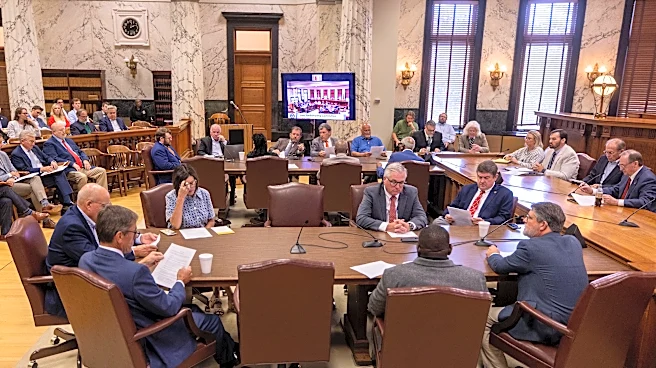
Governor Kay Ivey of Alabama has signed two special election bills into law, which could lead to significant changes in the state's congressional representation. These bills allow Alabama to use previously passed congressional district and State Senate
maps if a federal court or the U.S. Supreme Court lifts an existing injunction. This move follows a Supreme Court decision in Louisiana v. Callias, which ruled race-based redistricting unconstitutional. Alabama's 2023 congressional map, which was blocked by a federal court for likely violating the Voting Rights Act, could be reinstated, potentially increasing Republican representation from five to six seats. This change could affect U.S. Representative Shomari Figures, a Democrat, who might lose his seat. The special session that led to these bills was marked by intense debate, with Democrats opposing the measures and warning of potential voter backlash.
Why It's Important?
The signing of these bills is significant as it could reshape Alabama's political landscape by altering congressional district boundaries. This change may bolster Republican control in the state, aligning with broader national trends of redistricting in Republican-led states. The potential increase in Republican seats could influence the balance of power in Congress, affecting legislative priorities and national policy decisions. For Democrats, this development poses a challenge, as it may reduce their representation and influence in Alabama. The decision also underscores ongoing debates about the role of race in redistricting and the interpretation of the Voting Rights Act, with potential implications for future redistricting efforts across the U.S.
What's Next?
If the injunction is lifted, Alabama will proceed with the 2026 congressional race using the 2023 map. This could lead to legal challenges and further political maneuvering as both parties prepare for the implications of the new district boundaries. Stakeholders, including political leaders and civil rights groups, may respond with strategies to either support or contest the changes. The outcome of this redistricting effort could set a precedent for other states facing similar legal and political challenges.