

What's Happening?
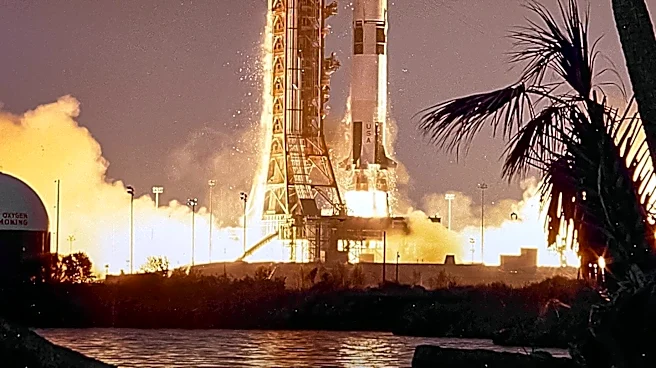
On August 1, 1968, NASA officially ended the production of its Saturn V moon rocket, a decision driven by budgetary constraints and the rising costs of the Vietnam War. The Saturn V was the only launch vehicle capable of carrying astronauts beyond low-Earth
orbit at the time and was the largest and most powerful rocket ever built. Despite having constructed 15 rockets, only 13 were flown. The decision to halt production came nearly a year before the historic Apollo 11 moon landing. The last Saturn V launched in 1973, originally intended for Apollo 18, but instead, it launched the Skylab space station.
Why It's Important?
The cessation of Saturn V production marked a significant turning point in NASA's Apollo program, effectively limiting the number of moon missions. The decision reflected broader economic pressures, as federal budget deficits and the Vietnam War necessitated cuts to space exploration funding. This move underscored the challenges of balancing ambitious scientific endeavors with fiscal realities. The legacy of the Saturn V continues to influence modern space exploration, as it set a benchmark for heavy-lift capabilities that NASA only matched decades later with the Space Launch System.
What's Next?
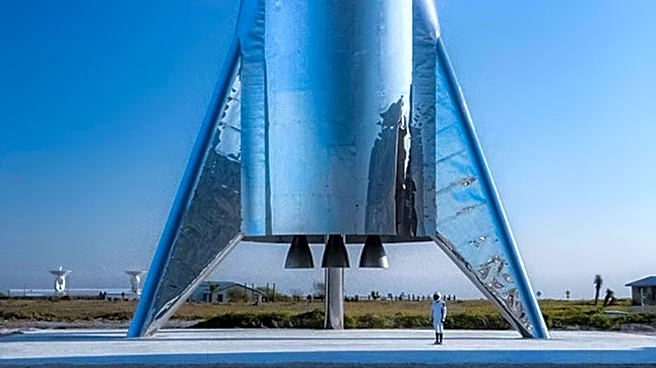
The end of Saturn V production led to a hiatus in U.S. manned moon missions until the Artemis program. NASA's focus has since shifted to developing new technologies and partnerships to return humans to the moon and beyond. The Artemis program, utilizing the Space Launch System, aims to build on the legacy of the Apollo missions. As NASA and private companies like SpaceX develop new megarockets, the lessons learned from the Saturn V era continue to inform the future of space exploration.