





What's Happening?
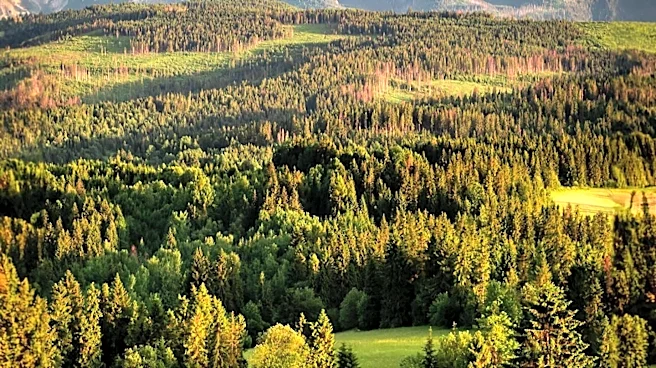
The U.S. House of Representatives has approved H.R. 8454, a bill aimed at simplifying land management between Yosemite National Park and Stanislaus National Forest. The legislation, introduced by California Republican Representative Tom McClintock, passed
by voice vote on September 14. It proposes transferring approximately 160 acres of Stanislaus National Forest land to Yosemite National Park and about 170 acres of park land to the national forest. All affected land will remain under federal ownership. The primary purpose of this transfer is to streamline administrative processes, as differing rules and permit requirements currently apply to the divided landscape. Democratic Senator Alex Padilla introduced a companion bill, S. 2881, in the Senate, indicating bipartisan support for the proposal. The bill also addresses grazing rights, aiming to place land used for cattle grazing under the Forest Service, which has a multiple-use management framework accommodating such activities.
Why It's Important?
This land transfer bill is significant for its potential to improve the efficiency and effectiveness of federal land management in a critical ecological area. By simplifying boundaries between Yosemite National Park and Stanislaus National Forest, the legislation aims to reduce administrative complexities for both agencies and land users. This could lead to more coherent conservation strategies, better resource allocation, and clearer guidelines for activities like grazing, which is explicitly mentioned as a reason for the change. For the U.S. public, streamlined management could enhance visitor experiences, protect vital wildlife corridors, and ensure the long-term health of these natural resources. The bipartisan support for the bill also highlights a rare instance of agreement on environmental and land-use policy, potentially setting a precedent for future collaborative efforts in federal land management. The bill's impact on local economies, particularly those reliant on tourism and ranching, could also be substantial.
What's Next?
Following its approval by the House, H.R. 8454 has been received in the Senate and placed on its legislative calendar. For the bill to become law, it must also pass the Senate and then be signed by the President. Given the bipartisan support, as evidenced by Senator Alex Padilla's companion bill, the prospects for Senate passage appear favorable. If enacted, the land transfers would proceed, leading to revised management plans for the affected parcels. The agencies involved, Yosemite National Park and Stanislaus National Forest, would then implement the new administrative structures, including the transfer of responsibility for existing permits and authorizations. Monitoring of the previously restored Ackerson Meadow, a key area within the proposed transfer, will continue, ensuring the ecological benefits of the restoration are maintained under the new management framework.
Beyond the Headlines
The Ackerson Meadow land transfer bill, while seemingly a technical adjustment, underscores broader themes in U.S. land management and conservation. It highlights the historical complexities of land ownership and usage, particularly in areas with rich natural resources and diverse stakeholders. The mention of grazing rights and the need to accommodate them within a 'multiple-use management framework' reflects the ongoing tension between conservation goals and economic activities. Furthermore, the bill's focus on simplifying boundaries speaks to the bureaucratic challenges inherent in managing vast federal lands, where overlapping jurisdictions can lead to inefficiencies and conflicts. The successful restoration of Ackerson Meadow prior to this legislative effort also demonstrates the potential for collaborative conservation, where public and private entities work together to address environmental degradation, setting a precedent for future ecological restoration projects across the nation.