
What's Happening?
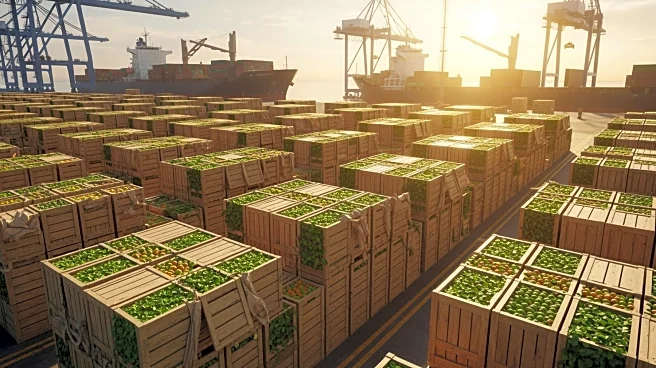
Egypt's agricultural exports have reached approximately 8.8 million tons this year, marking an increase of nearly 750,000 tons compared to the same period last year. This growth is highlighted in a report
submitted to Alaa Farouk, the Minister of Agriculture and Land Reclamation, by Mohamed El-Mounsi, Head of the Central Administration for Agricultural Quarantine. Citrus fruits lead the export list with over 2 million tons, followed by fresh potatoes at 1.3 million tons, and sweet potatoes at 328,000 tons. Other significant exports include beans, fresh onions, grapes, pomegranates, and mangoes, showcasing the diversity of Egypt's agricultural products.
Why It's Important?
The increase in Egypt's agricultural exports underscores the country's growing role in global agricultural trade. This expansion not only enhances Egypt's economic standing but also strengthens its trade relationships with other countries. The diversity in export products, from citrus fruits to mangoes, indicates a robust agricultural sector capable of meeting international demand. This growth can lead to increased foreign exchange earnings and provide a boost to the local economy, potentially leading to job creation and improved livelihoods for those involved in the agricultural sector.
What's Next?
As Egypt continues to expand its agricultural exports, the country may seek to explore new markets and strengthen existing trade partnerships. This could involve enhancing production capabilities and ensuring compliance with international quality standards to maintain competitiveness. Additionally, the government might focus on further diversifying its agricultural products to mitigate risks associated with market fluctuations and climate change impacts.
Beyond the Headlines
The success of Egypt's agricultural exports could inspire other countries in the region to invest in their agricultural sectors, potentially leading to increased regional cooperation and trade. Moreover, the emphasis on diverse crops may encourage sustainable farming practices and innovation in agricultural technology, contributing to long-term food security and environmental sustainability.