


What's Happening?
Mount Everest's climbing season has commenced following the clearance of a significant ice blockage on the mountain. Nepal's rope-fixing teams have completed the route through the Khumbu Icefall, allowing over 400 climbers and their Sherpa support teams to
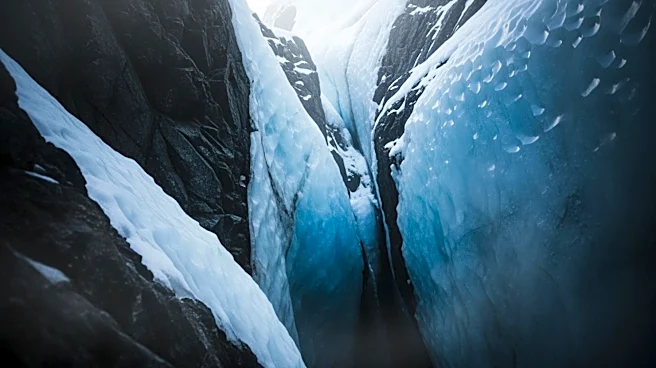
begin acclimatization rotations. This development comes after a delay of approximately two and a half weeks. However, safety concerns persist as the route passes beneath a large, unstable serac, an ice tower that remains partially intact and poses a risk of collapse. Despite these dangers, the current path was deemed the least risky option by route specialists known as the Icefall Doctors. Climbers are advised to move quickly through the danger zone, carry lighter loads, and use ladders one at a time to minimize risk.
Why It's Important?
The opening of the climbing route on Everest is significant for both the climbers and Nepal's economy. The climbing season is expected to generate approximately $6.1 million in revenue for Nepal's government, highlighting the economic importance of the expedition. However, the decision to open the route despite safety concerns underscores the ongoing tension between economic benefits and climber safety. The presence of the unstable serac poses a real threat to climbers, necessitating heightened caution and strategic planning to ensure safety. This situation reflects broader challenges in balancing tourism-driven economic gains with the inherent risks of high-altitude climbing.
What's Next?
Climbers will continue to navigate the route with increased caution, particularly in the serac-affected section. The Nepalese tourism department has emphasized the need for utmost care during the ascent. As the climbing season progresses, monitoring the stability of the serac and the safety of the route will be crucial. The situation may prompt further discussions on improving safety measures and route planning in future climbing seasons to mitigate risks associated with unstable ice formations.