








What's Happening?
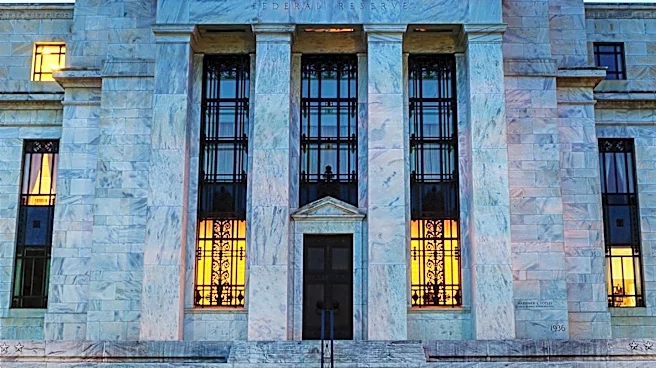
The Federal Reserve Bank of Philadelphia has reopened its 'Money in Motion' exhibit after a comprehensive redesign. The exhibit, which first opened in 2003, has been closed since April 2025 for renovations and is now open to the public. It features rare
coins and notes, including a $100,000 bill and a 1907 Saint-Gaudens Double Eagle gold coin. The exhibit aims to educate visitors about the Federal Reserve's role in the economy, showcasing the history and evolution of money in the United States. Interactive elements, such as a game where visitors can identify counterfeit bills, are designed to engage younger audiences. The exhibit is part of the Federal Reserve's efforts to demystify its operations and educate the public about its functions.
Why It's Important?
The redesigned exhibit at the Philadelphia Federal Reserve serves as an educational tool to increase public understanding of the Federal Reserve's role in the U.S. economy. By showcasing historical currency and interactive displays, the exhibit aims to make complex financial concepts accessible to a broader audience. This initiative is particularly significant as it coincides with the nation's 250th anniversary celebrations, highlighting the historical and ongoing importance of the Federal Reserve in maintaining economic stability. The exhibit's focus on education reflects a broader effort to enhance financial literacy among the public, which can lead to more informed economic decisions by individuals and communities.
What's Next?
The Federal Reserve Bank of Philadelphia plans to welcome approximately 20,000 visitors annually to the exhibit, with a focus on schoolchildren and educational groups. The exhibit is expected to foster greater public engagement with the Federal Reserve's activities and encourage visitors to explore further aspects of economic education. As the exhibit gains popularity, it may inspire similar initiatives at other Federal Reserve branches, contributing to a nationwide effort to improve financial literacy. The success of the exhibit could also lead to the development of additional educational programs and resources by the Federal Reserve.