



What's Happening?
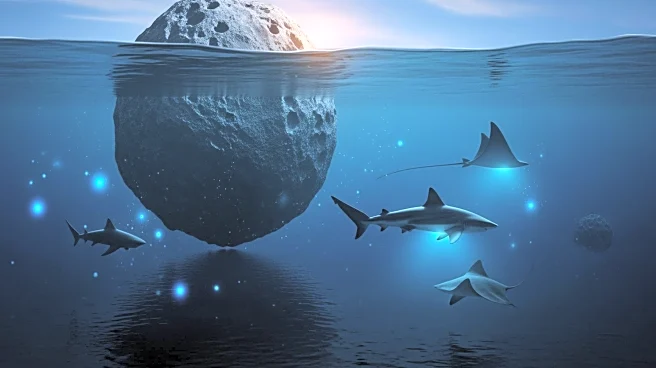
A recent study led by Swansea University has utilized artificial intelligence to analyze the fossil record of sharks and rays, revealing that the asteroid impact 66 million years ago, which led to the extinction of the dinosaurs, caused only a modest
decline in shark and ray species. The research, published in Current Biology, indicates that the number of these species decreased by only 10 percent following the asteroid event, a much smaller impact compared to the mass extinction of non-avian dinosaurs and other marine predators. The study also highlights that the diversity of shark and ray species peaked around 50 million years ago during the mid-Eocene period and has since declined by more than 40 percent. This long-term decline suggests that modern sharks and rays are starting from a reduced evolutionary baseline, emphasizing the importance of protecting existing species from human pressures such as overfishing and climate change.
Why It's Important?
The findings of this study are significant as they provide a new perspective on the resilience of sharks and rays to past extinction events, which can inform current conservation efforts. Understanding that these species have already lost a significant amount of evolutionary potential over millions of years highlights the urgency of addressing current threats like overfishing and climate change. The use of AI in this research also demonstrates the potential of advanced technologies to uncover new insights from historical data, which can be crucial for developing effective conservation strategies. The study underscores the need for immediate action to protect these species, which are vital to marine ecosystems, from further decline.