


What's Happening?
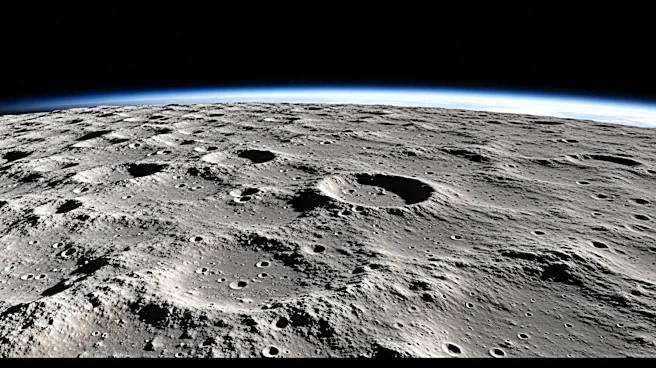
Astrophotographer Andrew McCarthy collaborated with Artemis II commander Reid Wiseman to capture the most detailed color images of the lunar far side. Utilizing a Nikon D5 DSLR camera, Wiseman shot burst sequences from orbit, which McCarthy later processed
on Earth. This technique involved stacking multiple images to reduce noise and highlight subtle spectroscopic differences in the moon's surface materials. The resulting images reveal a colorful, mineral-rich landscape, showcasing geological variations that are not visible to the naked eye. This effort marks a significant achievement in lunar photography, as previous attempts lacked the resolution to display such geological detail.
Why It's Important?
The images captured during the Artemis II mission provide valuable scientific data, enhancing our understanding of the moon's geological composition. By revealing the mineral diversity of the lunar surface, these images can inform future lunar exploration and research. The collaboration between McCarthy and NASA demonstrates the potential for innovative approaches in space photography, which could be applied to other celestial bodies. This development also underscores the importance of international space missions in advancing scientific knowledge and technological capabilities.
What's Next?
Following the success of this photographic technique, similar methods may be employed in future space missions to capture high-resolution images of other planets and moons. NASA and other space agencies might consider integrating such techniques into their standard imaging protocols. Additionally, the data obtained from these images could guide future lunar missions, particularly those focused on resource exploration and potential colonization efforts. The collaboration between astrophotographers and space agencies could lead to further advancements in space imaging technology.
Beyond the Headlines
The use of advanced photographic techniques in space exploration highlights the intersection of art and science, offering new perspectives on celestial bodies. This approach not only enhances scientific understanding but also inspires public interest in space exploration. The vivid images of the lunar far side challenge traditional perceptions of the moon, encouraging a broader appreciation of its complexity and beauty. As space exploration continues to evolve, such collaborations may play a crucial role in engaging the public and fostering support for future missions.