




What's Happening?
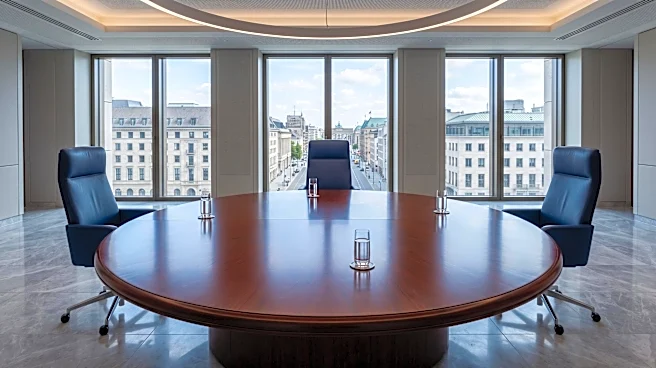
German Chancellor Olaf Scholz is scheduled to hold a meeting today in Berlin with French President Emmanuel Macron and Polish Prime Minister Donald Tusk. This trilateral meeting brings together key leaders from three prominent European Union member states.
The agenda for their discussions has not been explicitly detailed in the provided information, but such high-level gatherings typically address pressing regional and international issues, including economic cooperation, security concerns, and coordinated foreign policy stances. The meeting underscores ongoing diplomatic efforts within Europe to foster collaboration and address shared challenges. The interaction between these leaders is a regular feature of European political discourse, aiming to strengthen alliances and strategize on various policy fronts.
Why It's Important?
This meeting is important as it brings together leaders from Germany, France, and Poland, three influential nations within the European Union. Their discussions can significantly impact the direction of EU policy, particularly concerning economic stability, defense strategies, and responses to international crises. Germany and France are often seen as the core engines of the EU, while Poland represents a crucial voice from Central Europe, especially given its geographical and geopolitical significance. Coordinated efforts among these countries can lead to stronger, more unified European positions on global issues, affecting trade relations, security alliances, and diplomatic initiatives that have indirect but significant implications for U.S. foreign policy and economic interests. The outcomes of such meetings can influence transatlantic relations and the broader international political landscape.
What's Next?
Following the meeting, it is anticipated that a joint statement or press conference will be held, outlining the key discussion points and any agreements reached. The leaders may announce new initiatives or reaffirm existing commitments on various issues, ranging from economic cooperation to security matters. The discussions could also lay the groundwork for future policy decisions within the European Union, potentially influencing upcoming EU summits or legislative actions. Reactions from other EU member states and international partners will be closely monitored, as the positions adopted by Germany, France, and Poland often set a precedent or influence broader European consensus. The meeting's outcomes could also shape the narrative around European unity and its capacity to address complex global challenges.
Beyond the Headlines
The trilateral meeting between Germany, France, and Poland extends beyond immediate policy discussions, touching upon the evolving dynamics of European leadership and unity. This gathering highlights the continued importance of the Weimar Triangle format, which aims to foster cooperation and dialogue among these three nations. In a broader context, such meetings are crucial for maintaining a cohesive European front in an increasingly complex geopolitical environment, especially concerning relations with major global powers and responses to regional conflicts. The ability of these leaders to find common ground and present a united stance can bolster the EU's influence on the world stage, impacting global trade, security, and diplomatic efforts. The discussions also reflect the ongoing efforts to balance national interests with collective European goals, a fundamental aspect of the EU's operational philosophy.