
What's Happening?
Turkey and the United Nations have launched new diplomatic talks aimed at securing a ceasefire in the Black Sea between Russia and Ukraine. These discussions are critical for the security of grain exports
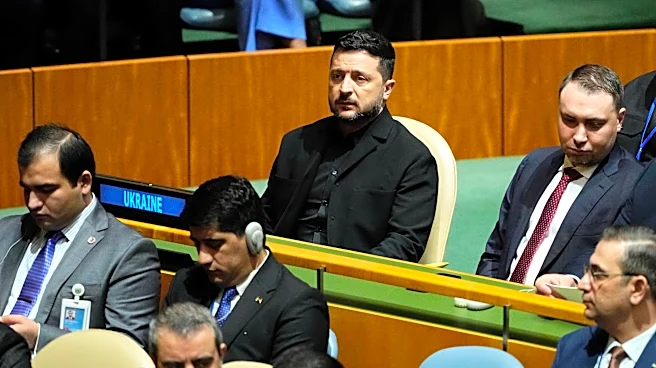
through the Black Sea, a vital route for global food supplies. The initiative seeks to re-establish arrangements similar to the 2022 Black Sea Grain Initiative, which ensured the safe passage of grain, fertilizer, and food from Ukrainian ports. Turkish officials have reported a 'positive' response from Ukrainian President Volodymyr Zelenskyy regarding the reestablishment of a grain corridor. However, Ukrainian Agriculture Minister Taras Vysotskyi expressed skepticism, seeing no immediate positive signs for such a development. Russia has set stringent conditions for any new deal, including sanctions relief and significant military concessions from Ukraine. The talks, mediated by envoys from the Swiss NGO Center for Humanitarian Dialogue, are scheduled to take place in early October. This effort comes after the collapse of the 2022 deal and increasing attacks on Black Sea port facilities by both Russia and Ukraine, which have impacted over a quarter of global wheat shipments.
Why It's Important?
The disruption of Black Sea grain shipping has significant global implications, particularly for food security and international markets. Russia and Ukraine collectively supply more than a quarter of the world's grain, and the ongoing conflict has led to a substantial shortfall in exports. This disruption has driven up freight costs, constrained alternative land and river routes, and contributed to higher global food prices. For the U.S., while not directly involved in the Black Sea grain trade as a primary exporter, the instability impacts global commodity markets, potentially affecting domestic agricultural prices and trade balances. The inability to move approximately 100 million tonnes of food from Ukraine and Russia to the global market, including 60 million tonnes of Russian grain and 30-35 million tonnes of Ukrainian grain and oilseeds, exacerbates food supply concerns worldwide. A successful ceasefire and the restoration of safe shipping lanes would stabilize global wheat markets, reduce logistical costs, and ease pressure on food-importing nations, many of which rely heavily on Black Sea supplies.
What's Next?
The upcoming talks in early October, mediated by the Center for Humanitarian Dialogue, will be crucial in determining the feasibility of a new Black Sea ceasefire and grain corridor. While Ukraine has expressed openness to the idea, Russia's demands for sanctions relief and military concessions present significant hurdles. Ukrainian Foreign Minister Andrii Sybiha noted that Ukraine has received four ceasefire proposals from international partners, including Turkey, Egypt, India, and the United States, with several focusing on Black Sea grain exports. However, Moscow has previously rejected proposals for a ceasefire or moratorium on strikes in the Black Sea. The success of these negotiations will depend on Russia's willingness to compromise and the ability of mediators to bridge the gap between the warring parties' demands. The global agricultural market will closely monitor these developments, as any breakthrough could lead to a stabilization of wheat prices and improved food supply chains, while a failure could further exacerbate existing food security challenges.
Beyond the Headlines
Beyond the immediate economic and humanitarian concerns, the Black Sea ceasefire talks highlight the complex interplay of geopolitics, international law, and global supply chains. The repeated disruption of the Black Sea Grain Initiative underscores the fragility of agreements in conflict zones and the challenges of ensuring humanitarian access amidst ongoing hostilities. The U.S. and other global powers' involvement in these discussions, even indirectly, reflects a broader concern for international stability and the prevention of widespread food crises. The long-term implications extend to the future of international trade routes, the role of neutral mediators in conflict resolution, and the potential for food to be weaponized in geopolitical struggles. The inability of Ukrainian farmers to sell sufficient crop volumes due to logistical constraints also raises concerns about future agricultural production, potentially leading to a reduction in next season's wheat output if access to ports does not improve. This situation could trigger a cascade of effects, impacting global food prices and exacerbating food insecurity in vulnerable regions for years to come.