


What's Happening?
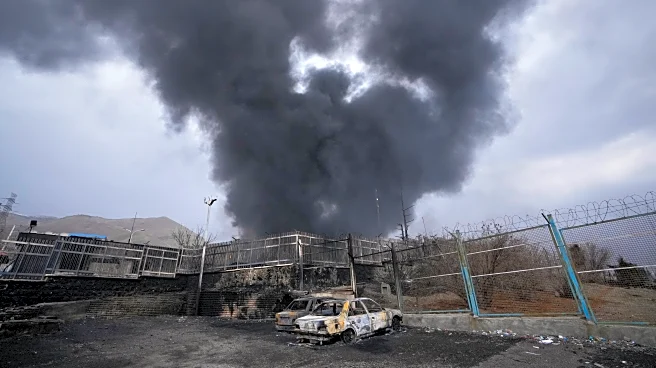
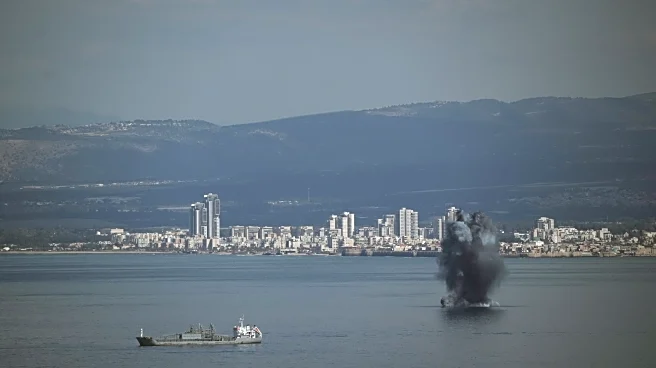
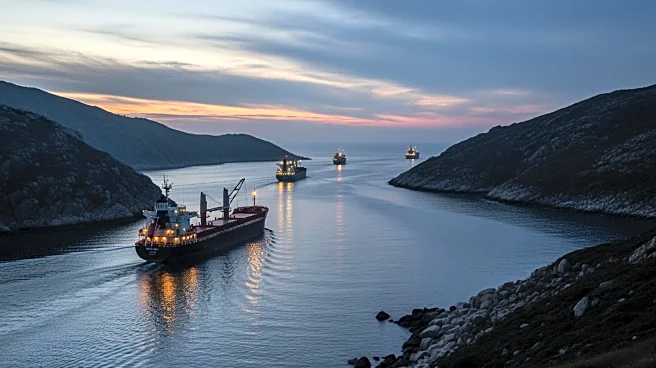
Shipping through the Strait of Hormuz has come to a near standstill, with only Iran-linked vessels observed transiting the waterway over the past 24 hours. This development follows multiple attacks on merchant vessels in the region, leading to significant
risks posed by ongoing missile and drone activity. The last non-Iranian commercial vessel to transit the strait was a Chinese-owned bulk carrier. The halt in shipping has resulted in rapidly filling storage tanks across the Persian Gulf, prompting some refineries to cut processing rates. Iraq, Kuwait, and the United Arab Emirates have reduced production, while Saudi Arabia has increased shipments from Red Sea terminals.
Why It's Important?
The Strait of Hormuz is a critical chokepoint for global energy supplies, and its disruption has significant implications for international oil markets. The halt in shipping could lead to increased oil prices and supply chain disruptions, affecting economies reliant on Gulf oil exports. The situation underscores the geopolitical tensions in the region, with potential impacts on global energy security. Countries dependent on oil imports from the Gulf may face economic challenges, while oil-producing nations might experience revenue fluctuations due to altered export dynamics.
What's Next?
If the shipping halt continues, further reductions in oil production and processing rates may occur, exacerbating supply chain issues. International stakeholders, including governments and energy companies, may seek diplomatic solutions to ensure safe passage through the strait. Increased military presence or international naval escorts could be considered to protect commercial vessels. The situation may also prompt discussions on diversifying energy sources and routes to mitigate future risks.