



What's Happening?
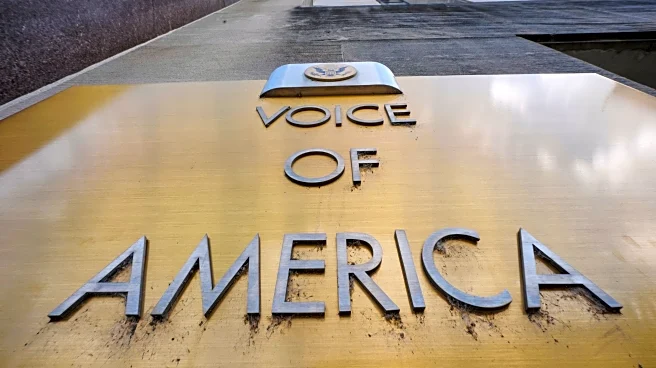
Journalists at Voice of America (VOA) have filed a lawsuit against the Trump administration, alleging that it is attempting to transform the government-run news outlet into a propaganda tool. The lawsuit claims that VOA's broadcasts to countries such
as Iran, China, and North Korea are being manipulated to echo White House narratives, rather than providing objective news as mandated by law. The U.S. Agency for Global Media, which oversees VOA, argues that taxpayer-funded broadcasts should align with U.S. policy and interests. A recent federal court ruling ordered the reinstatement of hundreds of VOA journalists who had been placed on paid leave, a decision the administration is currently appealing.
Why It's Important?
This lawsuit highlights ongoing tensions between journalistic independence and government influence in state-funded media. The outcome could have significant implications for the integrity of U.S. international broadcasting, potentially affecting how American values and policies are communicated globally. If the administration's appeal succeeds, it may set a precedent for increased governmental control over media content, raising concerns about press freedom. Conversely, a ruling in favor of the journalists could reinforce the importance of maintaining a firewall between government and media to ensure unbiased reporting.
What's Next?
The legal battle is expected to continue as the administration appeals the federal judge's order to reinstate the journalists. The case could prompt further scrutiny from Congress and media watchdogs regarding the governance of U.S. international broadcasting. Stakeholders, including media freedom organizations and international audiences, will be closely monitoring the developments, as the outcome may influence future policies on media independence and government oversight.
Beyond the Headlines
The lawsuit underscores broader ethical and legal questions about the role of government in media operations. It raises concerns about the potential erosion of journalistic standards and the impact on global perceptions of U.S. media credibility. The case also highlights the delicate balance between national interests and the principles of free press, which are foundational to democratic societies.