
What's Happening?
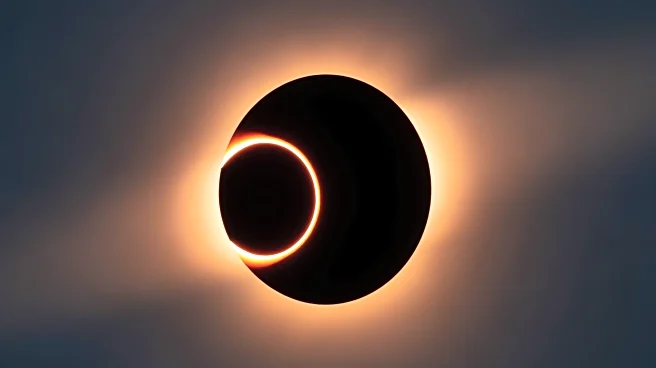
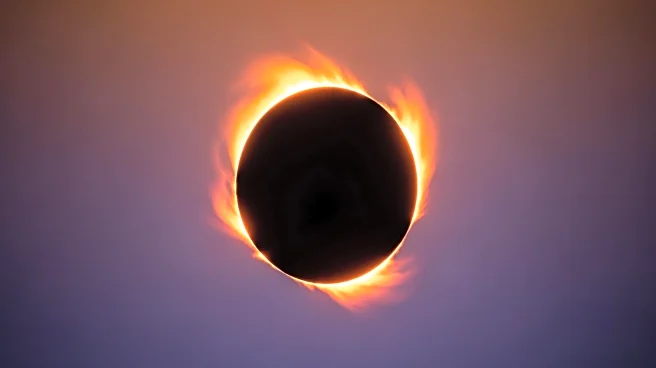
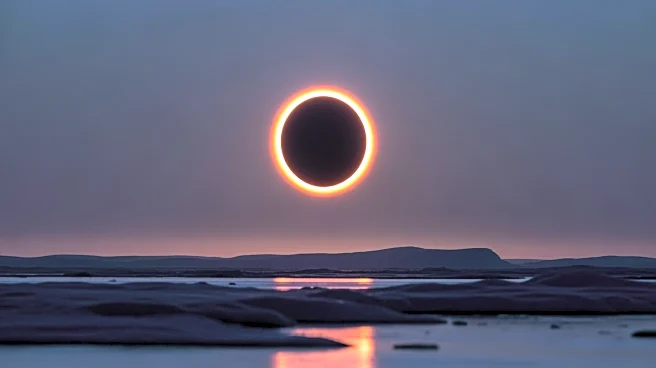
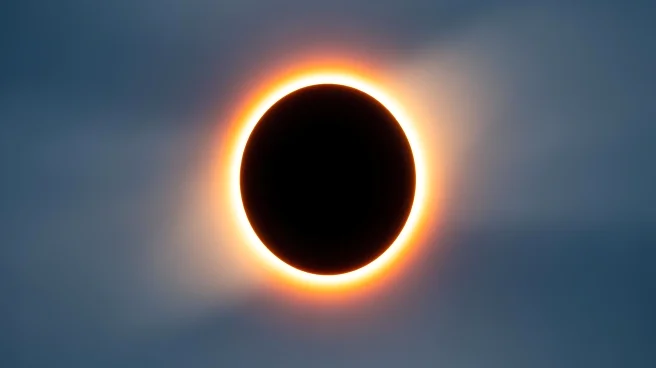
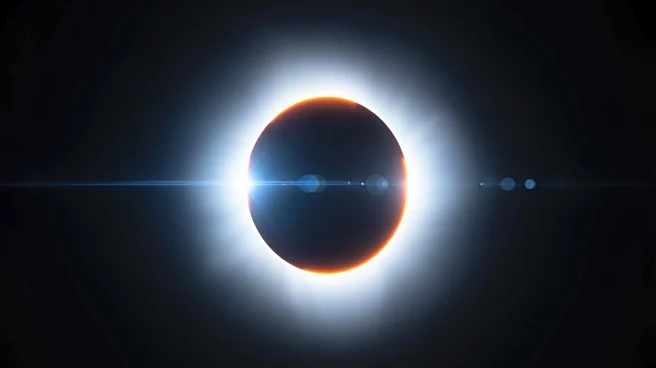
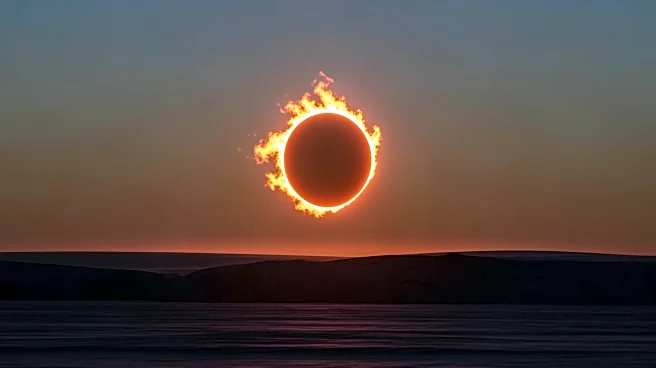
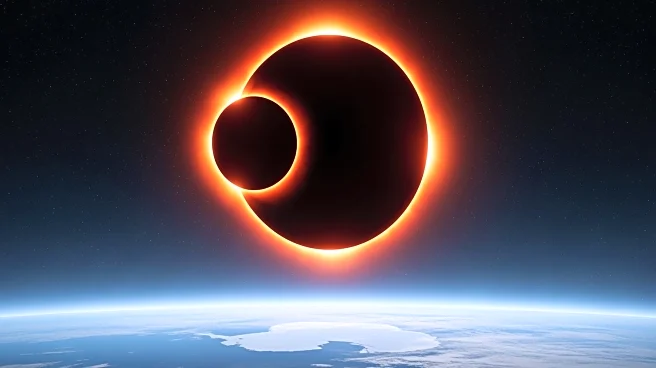
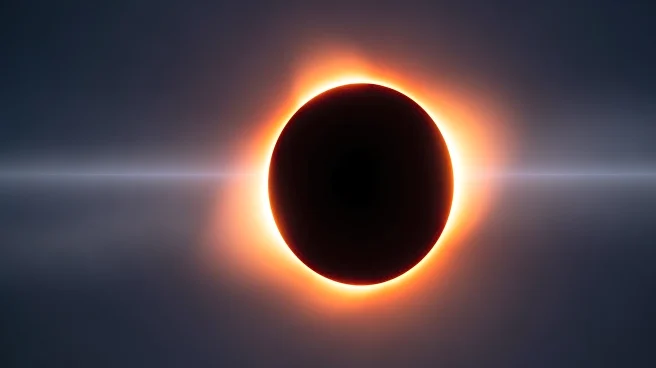
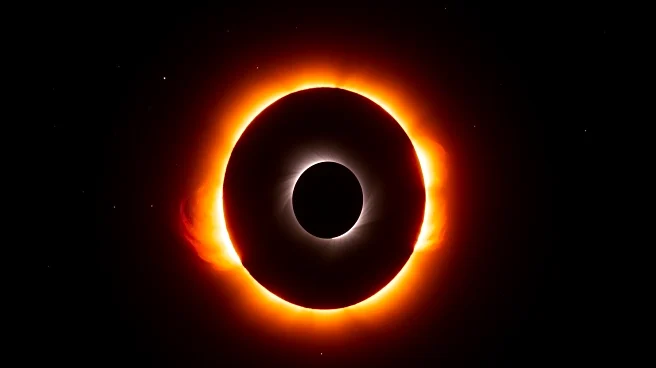
An annular solar eclipse occurred on February 17, 2026, creating a 'ring of fire' effect visible primarily over a remote region of Antarctica. During this event, the moon passed between the Earth and the sun, but due to its distance from Earth, it did
not completely cover the sun's disk. This resulted in a bright ring of sunlight encircling the moon's silhouette. The partial eclipse was also visible in parts of southern Africa and the southern tip of South America. The annular phase, where the sun was most obscured, occurred at 7:12 a.m. EST.
Why It's Important?
Solar eclipses, particularly annular ones, offer unique opportunities for scientific observation and public engagement with astronomy. They allow scientists to study the sun's outer atmosphere, the corona, which is usually obscured by the sun's bright light. For the public, such events can spark interest in space and science, encouraging educational activities and community gatherings. The visibility of this eclipse in remote regions highlights the global nature of astronomical phenomena and the interconnectedness of our planet's inhabitants in observing cosmic events.
What's Next?
The next significant solar eclipse will be a total solar eclipse on August 12, 2026, visible in Greenland, western Iceland, and northern Spain. This event will provide another opportunity for scientific study and public engagement, coinciding with the peak of the annual Perseid meteor shower. Preparations for viewing and studying this eclipse are likely to begin well in advance, with potential for increased tourism and educational activities in the regions where it will be visible.