





What's Happening?
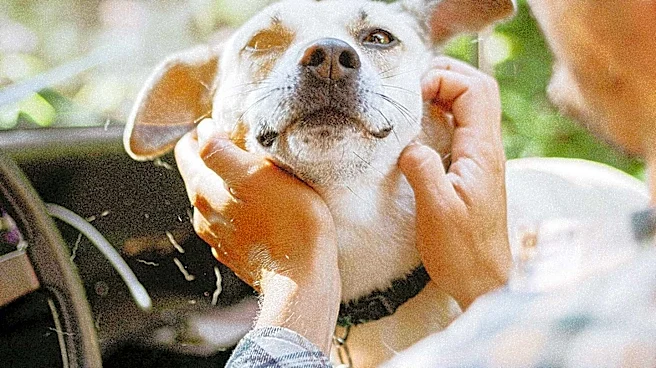
Japanese researchers, led by Miho Nagasawa and Takefumi Kikusui at Azabu University, have identified a chemical basis for the unique bond between humans and dogs. Their 2015 study, published in the journal Science, revealed that when humans and dogs gaze
into each other's eyes, both release oxytocin, a hormone known for its role in maternal-infant bonding. The study involved 30 dog-owner pairs, observing their interactions for 30 minutes and measuring oxytocin levels in urine samples before and after. Results showed that longer eye contact correlated with a significant increase in oxytocin for both the dog and its owner. A subsequent experiment demonstrated that administering oxytocin via nasal spray to female dogs led to longer gazing at their owners, which in turn increased the owners' oxytocin levels. This suggests a positive feedback loop where eye contact boosts oxytocin, strengthening the bond. The researchers also compared this phenomenon with wolves raised by humans, finding that wolves rarely held a human's gaze, and their handlers did not experience an oxytocin increase, indicating this bonding mechanism is specific to dogs.
Why It's Important?
This research offers a scientific explanation for the profound emotional connection many Americans share with their canine companions, impacting the understanding of pet ownership and animal welfare. By demonstrating that dogs have 'hijacked' a human bonding pathway, the study provides insight into the evolutionary advantage dogs gained through domestication, fostering a unique interspecies relationship. This understanding can influence how pet owners interact with their dogs, potentially encouraging more direct eye contact to strengthen their bond. For the pet industry, which is a significant part of the U.S. economy, these findings could lead to new products or training methods focused on enhancing the human-animal connection. Furthermore, the study contributes to the broader field of animal behavior and neurobiology, highlighting the complex hormonal mechanisms underlying social bonds, which could have implications for therapeutic uses of animals in the U.S., such as in emotional support or service animal programs.
What's Next?
Future research will likely delve deeper into the nuances of this oxytocin-mediated bonding, exploring how factors such as dog breed, individual temperament, and specific environmental contexts might influence the effect. Scientists may investigate whether similar hormonal responses occur in other human-animal interactions or if this mechanism is truly unique to dogs. The findings could also inspire studies into the long-term health and psychological benefits of this bond for both humans and dogs, potentially leading to new recommendations for pet care and human-animal interaction guidelines. There may also be efforts to replicate these findings with larger and more diverse populations of dogs and owners to confirm the universality of the observed phenomenon. The scientific community will continue to scrutinize the details, but the core finding provides a strong foundation for understanding the special relationship between humans and dogs.
Beyond the Headlines
The discovery that dogs utilize a human bonding pathway through oxytocin raises intriguing ethical and philosophical questions about interspecies relationships and the nature of companionship. It suggests that dogs are not merely pets but active participants in a deeply ingrained biological and emotional exchange, blurring the lines between human and animal social structures. This understanding could foster greater empathy and respect for animals, influencing public discourse on animal rights and welfare in the U.S. Culturally, it reinforces the narrative of dogs as 'man's best friend,' providing a scientific basis for a bond often described in anecdotal and emotional terms. The study also highlights the power of evolutionary adaptation, where a species can leverage existing biological mechanisms of another to its advantage, offering a compelling example of co-evolution. This deeper insight into the human-dog connection could also inform approaches to addressing issues like pet abandonment or mistreatment, by emphasizing the profound biological and emotional ties that are formed.