
What's Happening?
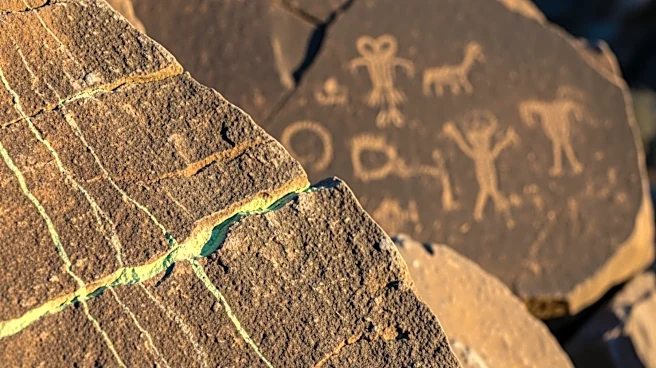
The South Dakota Board of Minerals and Environment is set to hear arguments regarding a proposed exploratory uranium drilling project near Craven Canyon in the Black Hills. This area is significant for
its historic petroglyphs and pictographs, some dating back over 7,000 years. The Chord Project, as it is known, includes a study area with 12 rock art sites and at least one suspected burial site. Environmental advocates and Indigenous activists have raised concerns about potential damage to these sites. The project, if approved, would involve drilling 50 holes, each 700 feet deep, on state-owned land. Despite assurances from the South Dakota Archaeological Society that the project poses no risk to historical sites, several nonprofit organizations and tribal governments have filed petitions opposing it.
Why It's Important?
The proposed uranium drilling project has sparked significant opposition due to its potential impact on culturally and historically significant sites. The Black Hills hold immense cultural value for numerous tribes, including the Lakota, Dakota, and Nakoda. The project also highlights broader issues related to domestic energy production in the U.S., as there is a push to increase domestic supplies of uranium and other resources critical for technology and energy sectors. The outcome of this hearing could set a precedent for how similar projects are handled in the future, balancing energy needs with cultural preservation.
What's Next?
The hearing is scheduled to begin on May 18 at the Mueller Center in Hot Springs, South Dakota. The decision of the South Dakota Board of Minerals and Environment will be closely watched by both proponents and opponents of the project. If the project is approved, it could lead to increased domestic uranium production, but also potential legal challenges from Indigenous groups and environmental organizations. The outcome could influence future resource extraction projects in culturally sensitive areas.